Get Full Government Meeting Transcripts, Videos, & Alerts Forever!
Get email alerts on the Hr1 Calfresh Impacts topic
No spam. Unsubscribe anytime.
California hearing warns H.R.1 and recent shutdown threaten CalFresh access, county budgets and food banks
Summary
State officials, county directors, food-bank leaders and recipients told the California State Senate Human Services Committee that the 2025 government shutdown and provisions of H.R.1 have produced immediate disruptions and could, if implemented fully, shrink CalFresh eligibility, reduce benefits and shift billions in costs to state and county budgets.
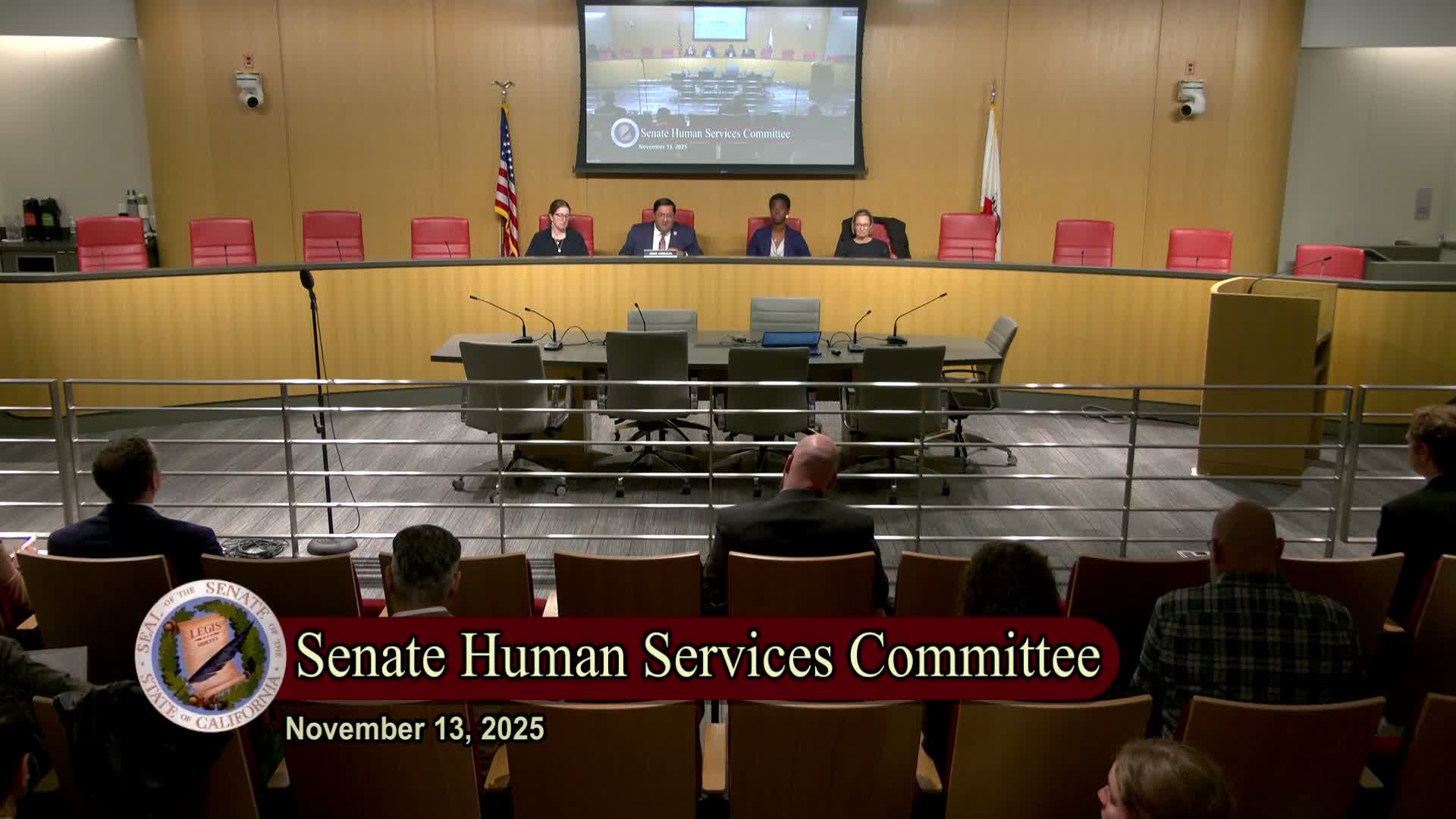
State lawmakers and dozens of witnesses told a Sacramento hearing that last month’s federal government shutdown and H.R.1’s policy changes have strained California’s nutrition safety net and could push hundreds of thousands of people off CalFresh.
“CalFresh is the largest anti-hunger program in the state,” Sen. Jesse Adegin, chair of the Senate Human Services Committee, said at the Nov. 1 informational hearing. He cited preliminary estimates of deep economic effects from H.R.1 and framed the hearing as a review of both the shutdown’s immediate harms and the longer-term effects of the federal changes.
The California Department of Social Services’ Chief Deputy Director David Swanson Hollinger told the committee that the department and counties moved quickly to notify recipients after federal Food and Nutrition Service (FNS) guidance produced uncertainty about November issuances. CDSS said it delivered multilingual direct messaging, issued all-county guidance to counties and coordinated with the state’s 49 major food banks and thousands of sub-agencies to route emergency assistance and deploy the California National Guard and volunteers where needed.
“We posted messages on our homepage, updated FAQs, and coordinated closely with counties, tribes and community partners,” Swanson Hollinger said, describing two waves of outreach and a newly established disaster operations center to accept and fulfill food bank requests.
County officials and food-bank leaders described what they said was a robust local response but warned the federal policy changes embedded in H.R.1 will produce longer-term harm. Carlos Marquez of the County Welfare Directors Association summarized a six-day statewide mobilization that combined county funds and philanthropic matches — roughly $80 million organized locally — to blunt immediate food needs during the shutdown.
Josh Wright of the California Association of Food Banks said demand surged in some areas (Alameda County helpline calls rose from roughly 63 to more than 460 week over week) while federal commodity flows from programs like the Emergency Food Assistance Program (TEFAP) were down about 38 percent year to date. Wright urged the Legislature to sustain and expand CalFood support, proposing a $60 million annual baseline and an additional $50 million one-time allocation to help food banks absorb what his group estimates could be hundreds of thousands of new visitors if H.R.1 reduces CalFresh coverage.
The Legislative Analyst’s Office and CDSS laid out the principal effects H.R.1 makes to CalFresh: expanded work requirements and time limits for able-bodied adults without dependents (ABODs), narrowed immigrant eligibility that excludes some humanitarian arrivals, limits on growth of the Thrifty Food Plan that underpins benefit calculations, restrictions on standard utility allowances for calculating benefits, and a new formula tying federal support to a program payment error rate that will create a state share of costs beginning in federal fiscal year 2027.
Ryan Woolsey of the LAO summarized the expected scope: expanded time limits could subject hundreds of thousands of adults to new requirements; an LAO/CDSS analysis estimated loss of eligibility for some immigrant groups and hundreds of millions in reduced benefits from changes to utility and benefit calculations. CDSS’s Ryan Gillette said California’s most recent measured payment error rate was roughly 10.98 percent and described a multi-pronged root-cause analysis and enhanced income-verification work intended to reduce errors and therefore lower the state’s exposure under H.R.1’s error-based cost-sharing formula.
County testimony focused on operational strain. Marla Stewart, director of Contra Costa County Employment & Human Services, said the county has about 65,142 CalFresh households and estimated up to approximately 20,400 people could lose CalFresh under H.R.1. Stewart outlined training and staffing needs to screen exemptions and apply the ABOD rules (one-day training for ~600 eligibility workers alone, estimated at about $916,000; ongoing verification workload she estimated at about $27.6 million annually for the county).
Several recipients and advocates described immediate hardship and widespread anxiety. Chris Navarro and Karen Ward, seniors from Richmond, described rationing food, skipping meals and the persistent stress of uncertain monthly benefits. Advocates and public commenters urged the state to expand the California Food Assistance Program (CFAP) eligibility to cover newly excluded humanitarian immigrants and to prioritize stable funding for nutrition-incentive programs and food banks.
Committee members pressed CDSS and other panels on next steps: automating verifications where feasible, using the investments in the January budget to support counties, and developing targeted outreach to help people meet work or exemption criteria. Officials repeatedly stressed that some H.R.1 provisions are already in effect while other changes await federal guidance and local policy development.
The hearing closed with Sen. Adegin saying the session was the start of many conversations about mitigation, and that the legislature, counties and administration must coordinate on budgets, automation, training and targeted outreach to minimize coverage losses.
The committee did not vote on any measure at the hearing; next steps described by witnesses included further interagency planning, LAO and CDSS analyses, county implementation planning and budget proposals to be considered during the January budget process.