Get Full Government Meeting Transcripts, Videos, & Alerts Forever!
Get email alerts on the State Overview topic
No spam. Unsubscribe anytime.
California lawmakers and agency leaders outline fisheries investments and funding shortfalls
Summary
At the joint fisheries forum, state leaders highlighted Prop 4 investments and recent progress on habitat restoration while warning that federal funding cuts and workforce reductions are jeopardizing hatchery production and monitoring capacity for salmon, crab and coastal ecosystems.
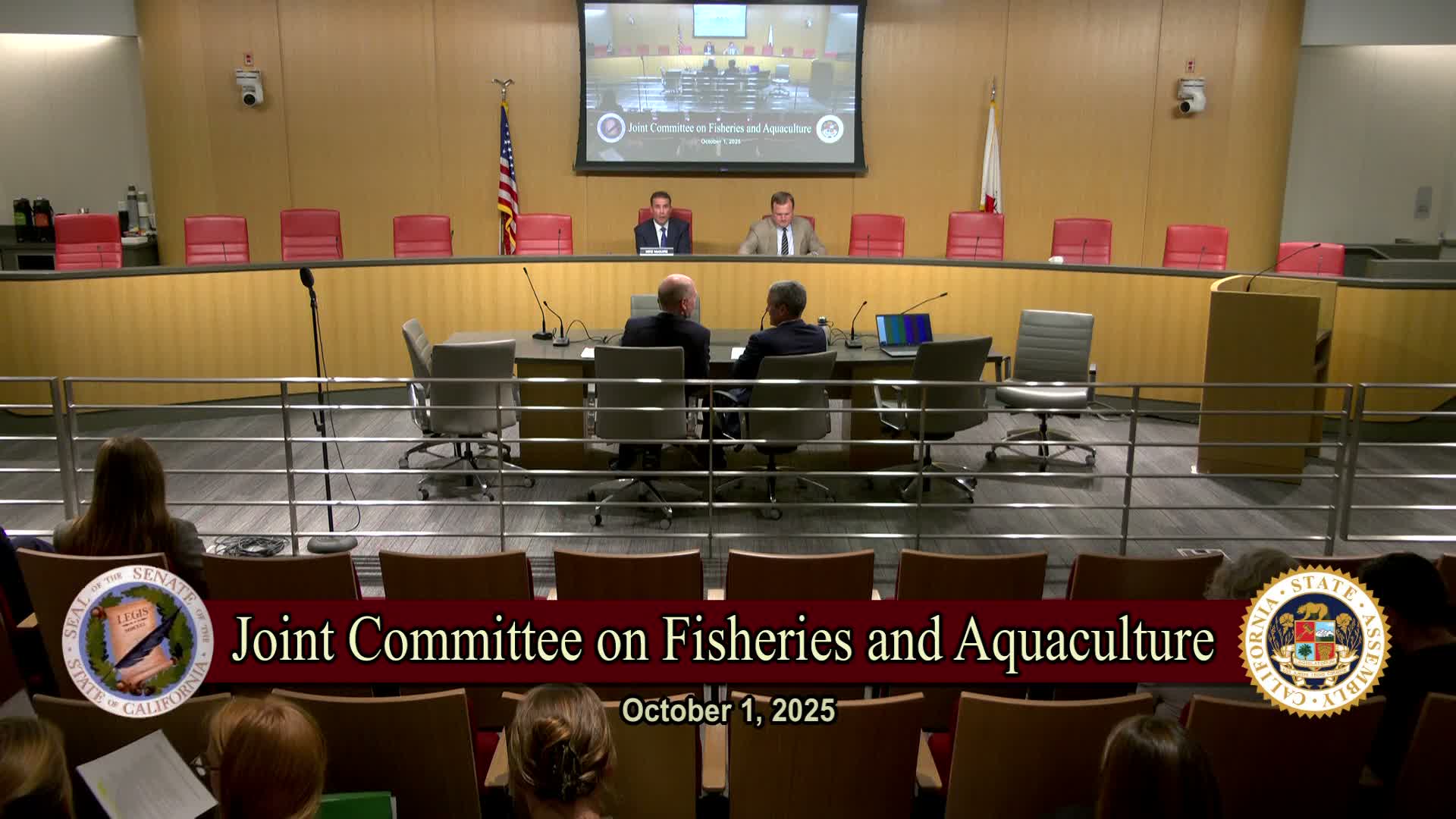
Senator McGuire opened the Joint Committee on Fisheries and Aquaculture's annual forum, saying the meeting would provide a state-level "state of the fishery" update and previewing panels on salmon, Dungeness crab, kelp and the Pacific marine heat event known as the "blob." He noted that commercial salmon fishing remains closed for a third straight year and that rural coastal communities have been hard hit.
Secretary Wade Crowfoot briefed lawmakers on the state's salmon strategy and restoration investments. "Proposition 4 has the potential to be a game changer," Crowfoot said, noting the legislature and governor have already appropriated roughly $376 million from the bond for coastal resilience actions that can benefit salmon and fisheries.
Crowfoot and other officials warned, however, that federal funding is uncertain. Crowfoot cited recent reductions to NOAA and said state funding and faster permitting will be essential to continue restoration work if federal support declines.
Director Bonham of the California Department of Fish and Wildlife described agency efforts to accelerate habitat restoration, remove derelict gear and modernize monitoring. He cited concrete accomplishments — the Klamath River dam removals and wetland projects such as Lookout Slough — but added that budget-driven constraints will force hard choices, including potential cuts to hatchery production if federal contracts are reduced.
The session included repeated cautions about capacity: agencies and non‑profit partners urged more sustained funding for monitoring and enforcement, and tribal leaders and fishermen called for a combination of state investment and legislative action to preserve both cultural and commercial fishing opportunities.
The forum concluded with committee members asking for follow-up briefings and specific data on ongoing restoration projects, program budgets and staffing needs. No formal votes were taken; the committee recommended continued legislative attention to implementation and funding gaps.