Get Full Government Meeting Transcripts, Videos, & Alerts Forever!
Scientists: Tijuana River wastewater can become airborne; researchers call for biomonitoring and targeted mitigation
Summary
Scripps and public‑health researchers presented water and airborne measurements showing aerosolized pathogens and toxic gases from a Saturn Boulevard 'hot spot', urged epidemiological and biomonitoring studies, and recommended immediate protections (air purifiers, warning signage) while infrastructure fixes proceed.
Researchers from Scripps Institution of Oceanography and public‑health teams described new measurements linking polluted waterflows in the Tijuana River Valley to airborne exposures and community health impacts. Presentations focused on two linked findings: a high‑resolution water‑forecast model that predicts near‑shore wastewater concentrations and scientific evidence that surf‑zone processes can aerosolize pathogens and toxic chemicals.
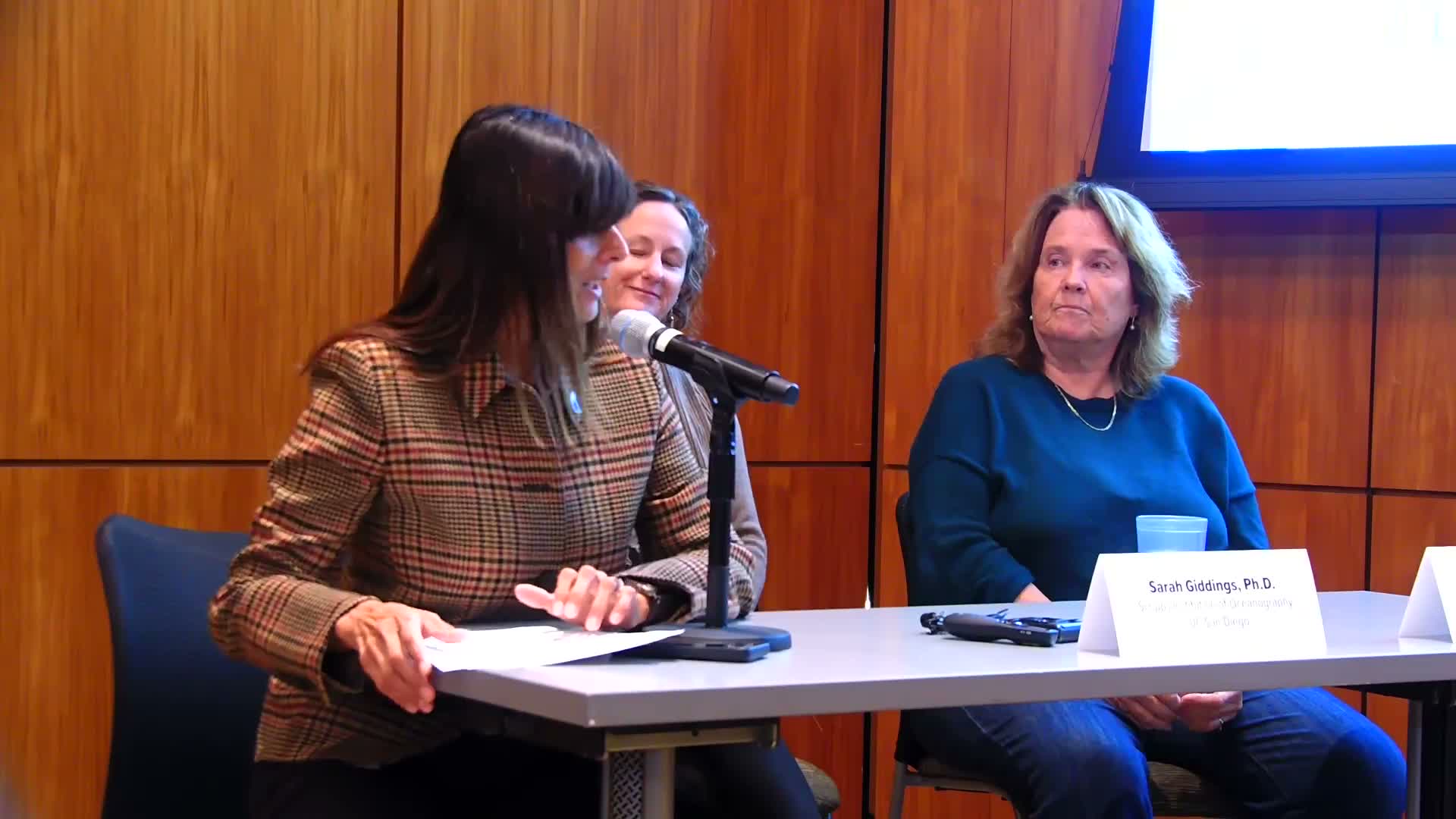
Dr. Sarah Giddings described a hydrodynamic model and a five‑day coastal water quality forecast that maps wastewater concentration and predicts beach‑closure risk. ‘‘We have developed a hydrodynamic, realistic numerical model… Our grid boxes are resolving down to less than 10 meters horizontal resolution,’’ Giddings said, and the forecast demonstrated roughly…
Already have an account? Log in
Subscribe to keep reading
Unlock the rest of this article — and every article on Citizen Portal.
- Unlimited articles
- AI-powered breakdowns of topics, speakers, decisions, and budgets
- Instant alerts when your location has a new meeting
- Follow topics and more locations
- 1,000 AI Insights / month, plus AI Chat