Get Full Government Meeting Transcripts, Videos, & Alerts Forever!
Get email alerts on the County Budget topic
No spam. Unsubscribe anytime.
Yolo County staff warn of a mounting $27 million shortfall next year; board begins tough budget process
Summary
County finance staff told supervisors the general fund faces a structural deficit that will require a mix of revenue increases and expenditure reductions; initial modeling shows an almost $27 million gap next year and a need for roughly $47 million of structural fixes over five years.
Yolo County officials on Jan. 13 told the Board of Supervisors that the county faces a growing structural budget deficit that will require policy choices on both revenue and spending.
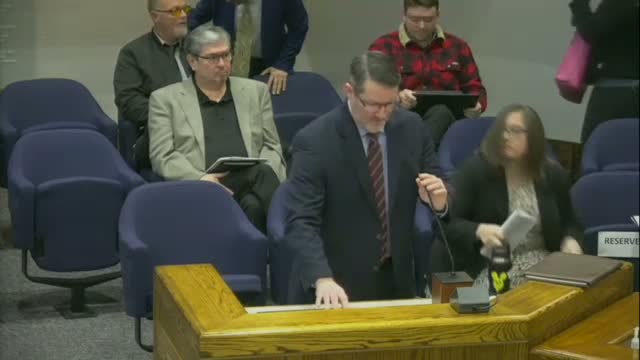
"We are facing what we call a structural budget deficit," Chief Financial Officer Tom Haines said as he opened a presentation on the five-year general fund forecast. Staff projected an expected deficit of almost $27 million in fiscal year 202627 and warned the county will need roughly $47 million in combined revenue increases or expenditure reductions over the next five years to reach structural balance.
The presentation laid out assumptions behind the forecast: 4% annual property-tax growth, a gradual decline in interest earnings, and annual salary growth of about 4.5% with no vacancy savings. Laura Liddicot, the countys chief budget official, told the board that the forecast assumes no new corrective actions unless the board directs otherwise and that continuing reliance on one-time fixes will deplete reserves.
Supervisors pressed staff for details and trade-offs. Staff said nearly 1,800 county positions were authorized in the adopted budget (about 1,777 funded) and that 205 of those were vacant. On average a single position costs roughly $178,000 including salary and benefits, staff said. "If we were to try to tackle the $27 million deficit in one year that gets us to roughly 150 position-equivalents," Haines said in response to a supervisors question.
Staff presented a menu of revenue options and trade-offs: a countywide half-cent sales tax could yield in the ballpark of $25 million, a full 1% sales tax limited to the unincorporated area would generate an estimated $6 million, and an ERAF legislative fix might return about $3 million. Many of the larger revenue options require voter approval or state legislation, and staff emphasized that, even if pursued, revenue measures would not fully resolve the structural gap on their own.
"Whatever portion of our structural deficit we are unable to solve through revenue increases will need to be solved through expenditure reductions," Haines told supervisors, who directed staff to return with more fine-grained analyses in subsequent budget sessions.
What happens next: staff said they will return Jan. 27 to seek direction on budget principles and assumptions to inform department instructions and to present a timeline for the FY 202627 budget process. The board also asked for more detail on how many of the countys funded positions are supported by the general fund and how vacancy and salary-savings assumptions affect multi-year balances.
Ending: Supervisors indicated a preference for a surgical approach to reductions, pairing revenue advocacy with targeted cuts and clearer information on the permanency of any reductions. Staff will bring back scenarios, including department-specific reduction plans and possible revenue ballot options, at the next budget hearing.