Get Full Government Meeting Transcripts, Videos, & Alerts Forever!
Get email alerts on the Governance Compensation topic
No spam. Unsubscribe anytime.
Supervisors debate pay, charter amendment and transparency as public criticism grows
Summary
A heated discussion and public comment focused on board pay and a proposal to put supervisor pay raises to a public vote. Supervisors split over recruitment/retention concerns versus principle and public trust; C‑17 (corrections to pay schedule) was approved with a direction to revisit elected‑official compensation on Jan. 6.
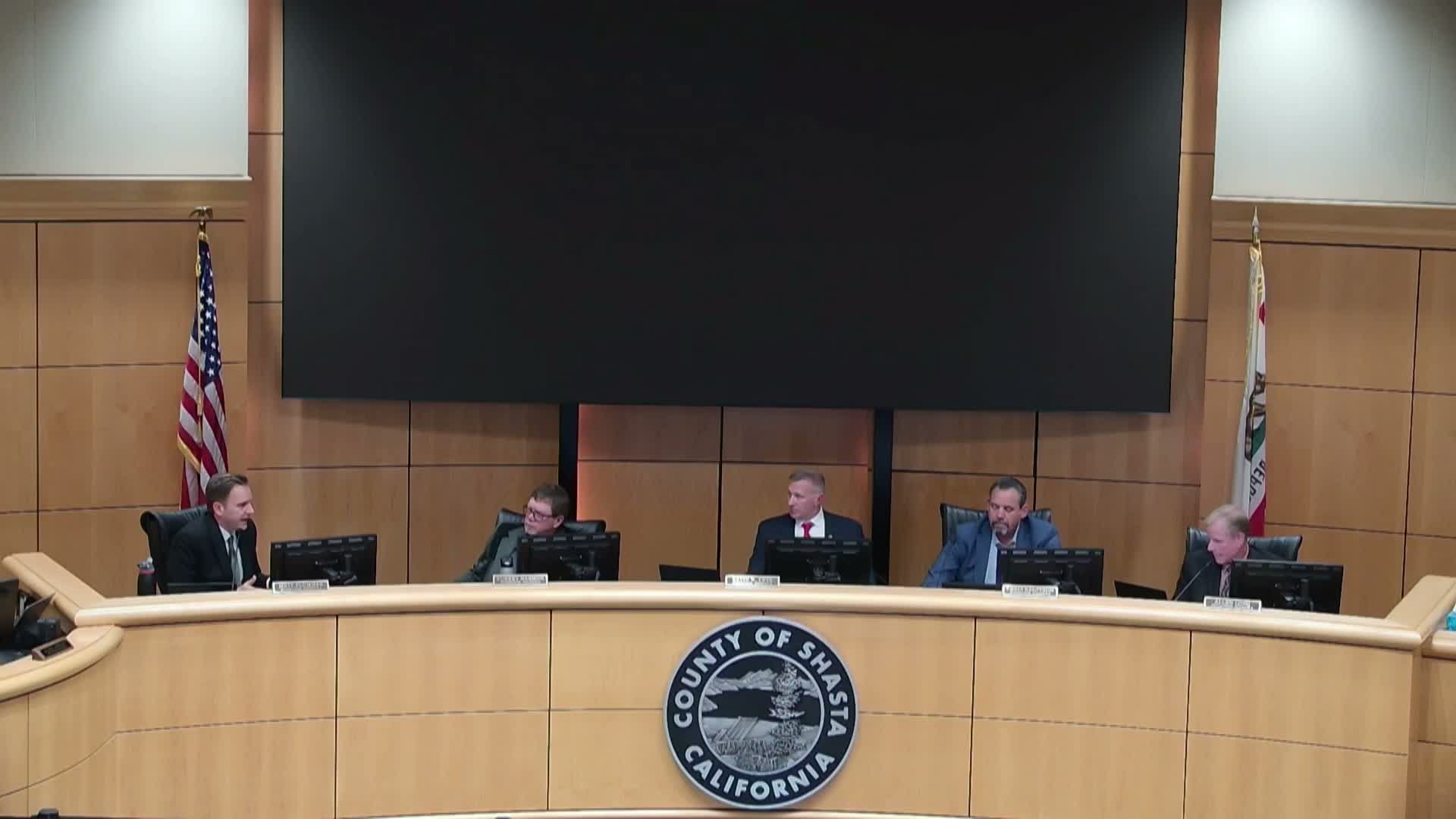
Shasta County supervisors spent substantial time on Dec. 16 debating board and elected‑official compensation and a proposed charter amendment that would require any board pay changes to go to a public vote and cap automatic increases at 1% per year.
Supervisor Plummer framed the proposal as a matter of public trust and principle, saying the public should decide changes to supervisors’ pay and that any future increases should be modest. “It is incumbent upon us to be accountable to the public on this important matter when it comes to our pay,” he said.
Other supervisors raised concerns that making board pay subject to public referendum or setting very low pay risks restricting the candidate pool to people with independent means, retirees or those who can afford part‑time service — a recruiting and retention problem the board must weigh. Supervisor Long said he opposed arbitrary limits that would prevent the county from attracting capable candidates and noted that some neighboring counties pay minimal amounts.
Public commenters strongly criticized the board for recent pay decisions, urged rollbacks or public votes, and called for broader transparency in compensation decisions. Several speakers said pay increases created an appearance of self‑enrichment and demanded changes to restore public confidence.
Procedurally, the board approved C‑17 — a staff resolution amending the county’s salary schedule for certain unrepresented management and elected department heads that had been inadvertently excluded from an earlier action — and directed staff to return Jan. 6 with a discussion about consolidating elected positions into a single compensation conversation or charter amendment.
Board members agreed to bring a recommended set of goals from the strategic‑plan ad hoc back to the board at the second meeting in January.
Next steps: staff will return Jan. 6 with options for a consolidated approach to elected/officer compensation and the board will consider whether to place any charter amendment proposals on a future ballot.