Get Full Government Meeting Transcripts, Videos, & Alerts Forever!
Get email alerts on the Tumf Cci topic
No spam. Unsubscribe anytime.
WRCOG adopts automatic annual fee escalator for TUMF, capped at 5%
Summary
The Executive Committee voted unanimously to implement an automatic Cost Construction Index (CCI) adjustment for the Transportation Uniform Mitigation Fee (TUMF), starting with a calculated first-year increase of about 2.6%, with an annual cap of 5% and provisions to trigger a nexus study if larger shifts occur.
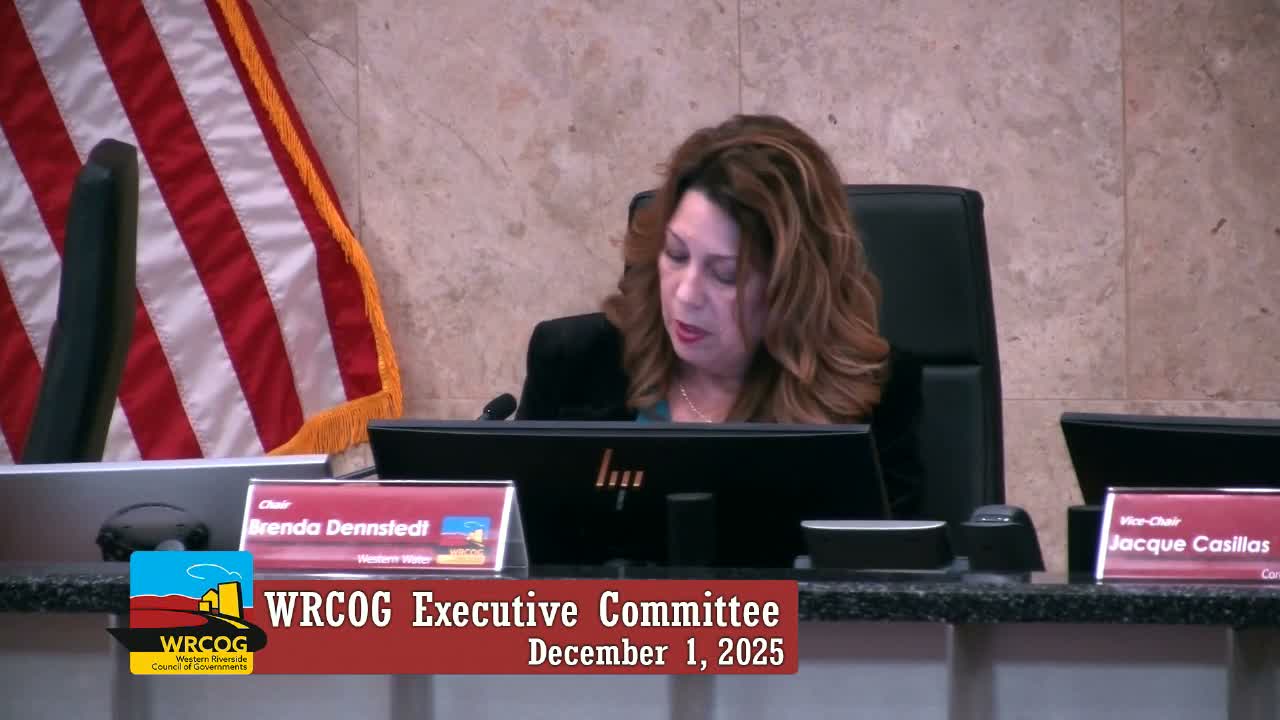
The Western Riverside Council of Governments Executive Committee voted unanimously to adopt an automatic Cost Construction Index (CCI) adjustment for the Transportation Uniform Mitigation Fee (TUMF).
Chris, WRCOG's TUMF lead, presented the item and explained the proposed method: take half of the Engineering News-Record construction-cost index and half of the National Association of Realtors indicator for right-of-way costs to calculate an annual adjustment. The proposed approach removes discretionary adjustments and would be implemented each July 1 after public notice. Staff calculated a first-year adjustment of 2.6% as an example; the plan caps annual adjustments at 5%. Chris said the formula can also produce downward adjustments when indices fall.
Staff said the approach aims to avoid large, infrequent fee jumps that can cause market shocks and impose heavy administrative burdens (a separate resolution or ordinance, multiple readings and notices) on member agencies. The presentation included illustrative impacts (single-family example: roughly a $400 increase; industrial: approximately $0.06 per square foot) and the rationale that predictable, small annual increases are preferable to multi-year spikes.
Committee members asked about outreach to developers and other impacted stakeholders, pass-through of fees to homebuyers, and how caps would be handled during unusually large market shifts. Chris said staff had briefed planning directors and TAC, discussed the approach with developers at events, and that the cap exists so that very large year-to-year changes require a new nexus study to reassess the fee structure.
The clerk recorded no public comments. A motion to adopt (mover: San Jacinto; seconder: Paris) passed on a roll-call vote; clerk noted water districts do not vote on TUMF matters. Staff will provide annual recalculations to member jurisdictions and each city/county will implement the adjustment through their regular local process.