Get Full Government Meeting Transcripts, Videos, & Alerts Forever!
Get email alerts on the Business Regulation topic
No spam. Unsubscribe anytime.
Commission backs moving cannabis community-benefit fees into ordinance and adding a sales-based option
Summary
The planning commission voted to recommend that the Board of Supervisors move community-benefit fee language from Board Policy B-9 into Ordinance 671 and add a retail option allowing cannabis retailers to choose either the existing flat square-foot fee or a 5% net-sales quarterly fee, with county reporting and audit provisions.
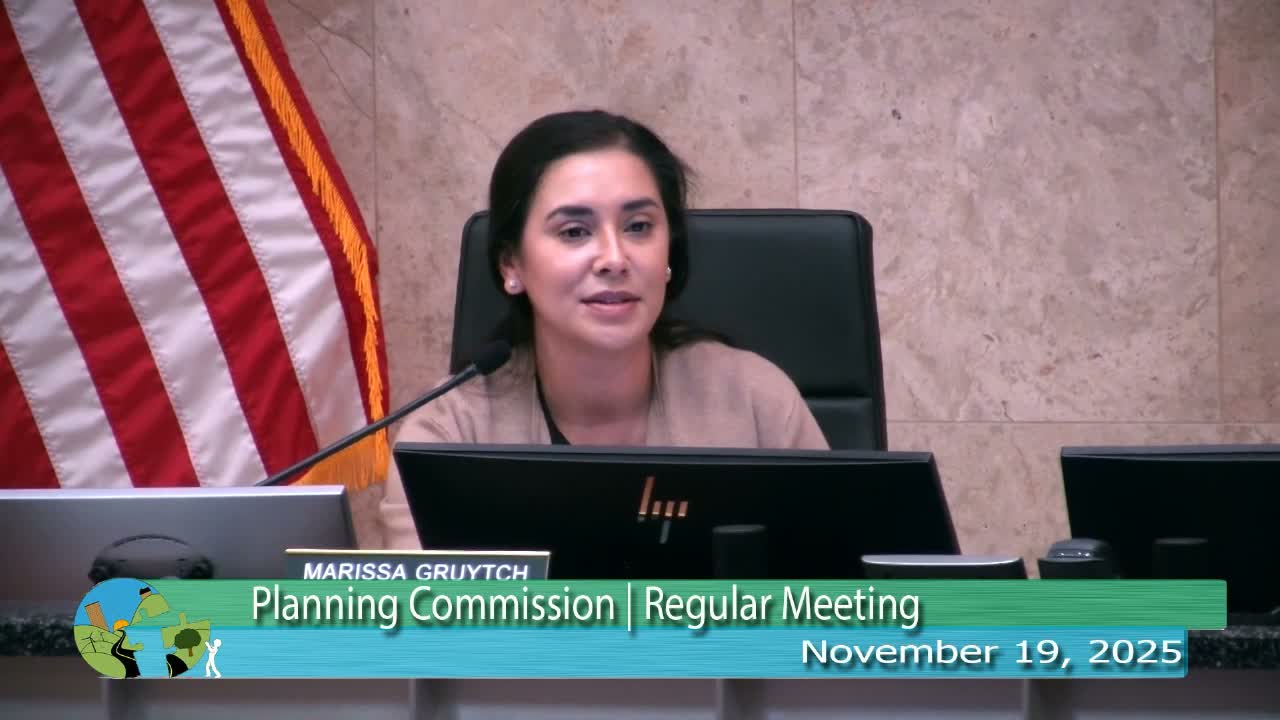
The Riverside County Planning Commission on Nov. 19 voted to recommend to the Board of Supervisors an amendment to commercial cannabis fee rules that would relocate fee language from Board Policy B-9 into Ordinance 671 and offer a second option for retailers to remit community-benefit payments.
Staff explained that fees traditionally belong in an ordinance and that the proposal would preserve the current flat fee structure based on square footage while adding an alternative retail option for new and existing operators: 5% of net sales remitted quarterly, with county reporting, a 30-day remittance requirement and county audit rights. Staff emphasized the change is a fee-collection method, not a new tax, and that operators could seek development-agreement amendments to switch options if the ordinance change is adopted.
Joshua Nagar, counsel for an operator and a director of the Inland Empire Cannabis Chamber of Commerce, spoke in support and thanked staff for excluding mandatory state taxes from the county’s gross-revenue definition.
Commissioners noted administrative capacity questions and staff said an administrative staff member is in place to handle quarterly reporting, collection and auditing. The commission voted to recommend the fee changes be forwarded to the Board of Supervisors and to find the amendment CEQA-exempt.
If the Board approves the ordinance amendment, existing operators could request development-agreement amendments to change their fee structure; new operators would select between the square-foot flat fee or the sales-based percentage at the time of approval.