Lifetime Citizen Portal Access — AI Briefings, Alerts & Unlimited Follows
South Dakota outlines loan‑repayment, licensure and regional office plans to tackle rural legal deserts
Loading...
Summary
Chief Justice Stephen Jensen described three main efforts to boost rural legal services: a decade‑old rural practice tuition‑reimbursement program, an alternative third‑year licensure pathway at the University of South Dakota, and reorganization of indigent defense with regional offices.
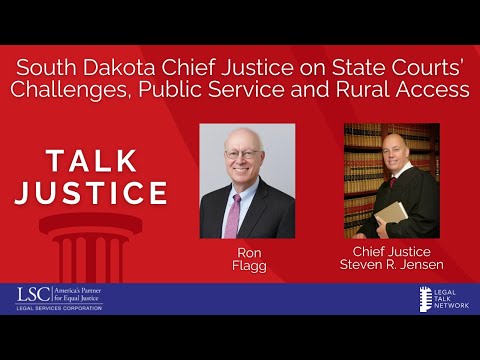
Chief Justice Stephen Jensen told the Legal Services Corporation podcast that South Dakota faces ‘‘legal deserts’’ in many counties and described three programs designed to increase attorney supply in rural areas.
Scope and statistics: Jensen said the state has six counties with no lawyers and 23 counties with three or fewer lawyers. He added that in Sioux Falls roughly 64% of the state's lawyers practice in the metro area, which contains about 35% of the population, illustrating a stark geographic concentration.
Program 1 — rural practice loan reimbursement: Jensen described a program started about 10 years ago that partners courts, the state bar and local governments to reimburse law‑school tuition over five years for lawyers who commit to practicing in qualifying rural communities; participants receive monthly reimbursements during the five‑year period and most reportedly remain after completing the term.
Program 2 — alternative licensure/third‑year experiential pathway: Jensen described an experiential program at the University of South Dakota that places third‑year students with public interest entities (prosecutors, public defenders, legal services) under supervision, requires a portfolio review by bar examiners, and ties licensure to graduation; participants agree to at least two years of public service, and Jensen said the first graduates are expected in 2026.
Program 3 — indigent defense reorganization and regional offices: Jensen said the state has been working with the legislature to move away from a purely county‑funded system by creating a state appellate office and planning regional offices to provide criminal defense in counties that struggle to recruit lawyers.
What to watch: Jensen and Flagg said these measures are intended to address both supply (encouraging lawyers to relocate or stay) and structural barriers (financing and licensure pathways). Outcomes and exact funding levels were not specified in the interview.