Get Full Government Meeting Transcripts, Videos, & Alerts Forever!
Get email alerts on the Deannexation topic
No spam. Unsubscribe anytime.
Holly Springs council authorizes mayor to sign resolution opposing proposed deannexation bill
Summary
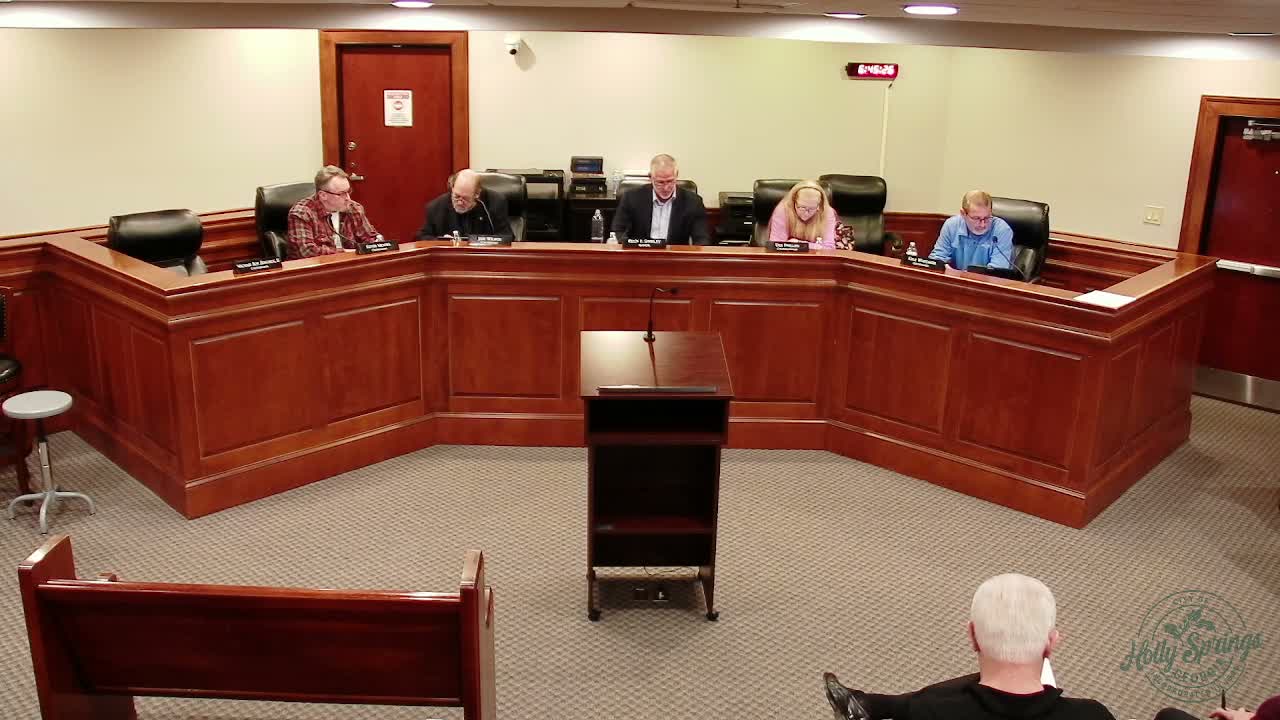
The Holly Springs City Council voted 4-0 on Jan. 26 to authorize the mayor to sign an updated resolution opposing a proposed deannexation bill before the Georgia General Assembly, after heated discussion and allegations that the measure is politically motivated.
The Holly Springs City Council on Jan. 26 voted 4-0 to authorize the mayor to sign a revised resolution opposing a proposed deannexation bill in the Georgia General Assembly.
Council discussion focused on newly surfaced details about the measure and its potential effects on city services and tax burdens. Speaker 1 said staff had seen no study showing the bill’s financial impact on the city or county and warned that "city taxes would go through the roof for all residents that live here if this were to happen," arguing the resolution needed rewording and prompt action to respond to the legislative proposal.
The exchange became sharply personal at times. Speaker 4 said he had exchanged messages with a state legislator and asserted, "He's doing this to be vindictive," alleging the proposed action was motivated by personal retribution; he named John Albers in that discussion. Several council members said the proposed changes — including reported ideas about altering representation and term limits — should originate locally with public input rather than via a state-filed bill.
Council members asked that the mayor circulate the revised resolution to them for review before signing. Speaker 3 moved that the mayor be authorized to sign the updated resolution after changes are made; Speaker 1 seconded and the motion carried 4-0. Council members said they would try to complete and review the draft on short notice, with staff aiming to prepare an updated version the next day.
The council’s action is procedural: it authorizes the mayor to sign the city’s opposition and does not itself change municipal boundaries or enact state law. The council did not receive an independent financial impact study during the meeting; staff and council members said they had seen only preliminary information about the bill. The mayor will circulate the revised text to council members for review prior to signing.
Next steps: staff will prepare the revised resolution for circulation; the council discussed the possibility of a special-called meeting for final action if needed.