
After lengthy discussion, MMSD board tables purchase of elementary SEL curriculum
Get AI-powered insights, summaries, and transcripts
Subscribe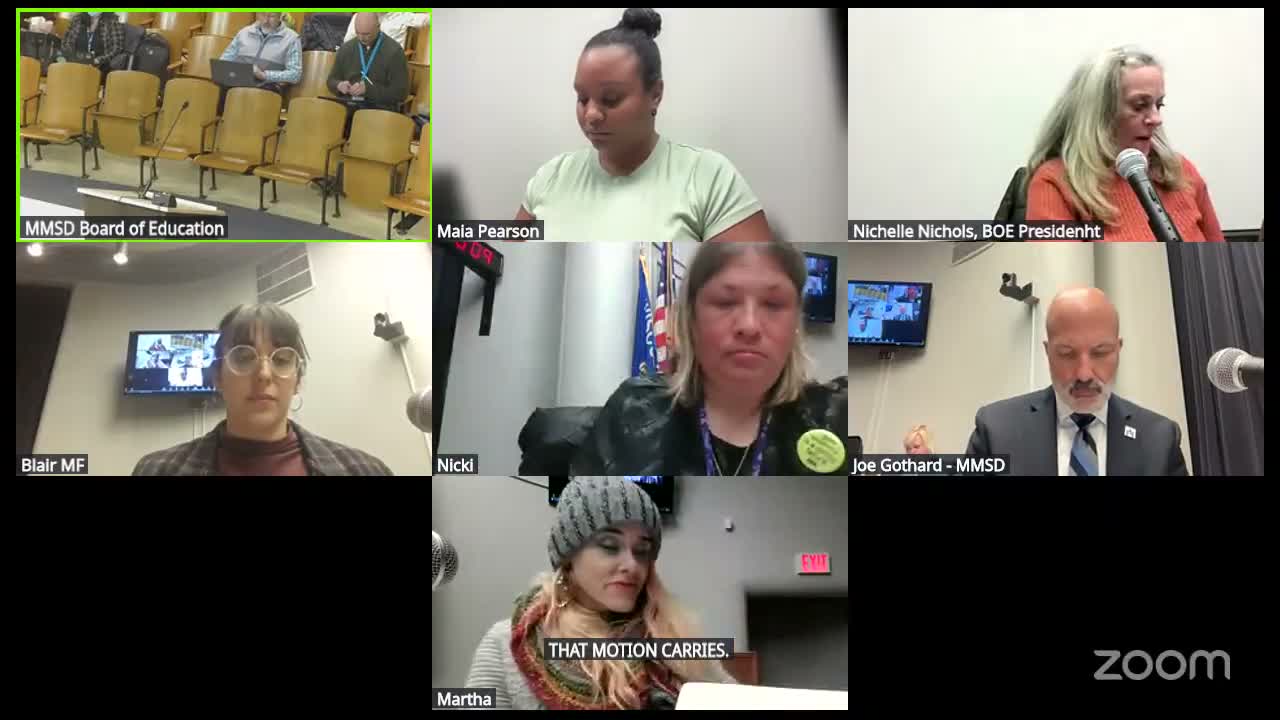
Summary
The board debated a proposed $270,625, three‑year purchase of a universal elementary social‑emotional learning curriculum and voted to table the item for further review, citing concerns about screen time, recurring costs, and need for broader board immersion in the materials.
The Madison Metropolitan School District board on Jan. 26 tabled a plan to purchase a universal elementary social‑emotional learning (SEL) curriculum after an extended discussion among board members and administration.
The consent agenda item (10.8) proposed $270,625 over three years for an SEL curriculum with an ongoing estimated annual cost of about $100,000 thereafter. Administration said the vendor’s platform would require 3–5 minutes per week of brief student check‑ins (designed as formative assessments) and emphasized professional development and school choice for implementation. "That check‑in allows us real‑time insight for educators," Dr. Esser said, describing privacy‑conscious aggregate reporting and school‑level data to inform interventions.
Board members raised multiple concerns before the tabling motion: several objected to recurring vendor costs and the district’s long‑term ownership of curriculum materials; some said SEL instruction should be primarily in‑person rather than mediated by students entering emotional check‑ins on devices; others expressed a desire for a more detailed demonstration and broader representation in the RFP committee. One board member said she feared reducing a "super duper important" human process into a mechanical 3–5 minute check‑in.
After discussion, board member Castro moved to table item 10.8 until the next regular board meeting to allow administration to provide additional materials and an "immersive experience" for board members. The motion to table carried. Administration said tabling would delay implementation for early adopter schools but would allow the team to respond to board questions about costs, data privacy, and training requirements.
The board did not vote to approve the vendor purchase; the administrator team said it will return with clarifying documentation and an opportunity for board members to see demonstrations and pilot results.