Get Full Government Meeting Transcripts, Videos, & Alerts Forever!
Get email alerts on the Snap Employment Training topic
No spam. Unsubscribe anytime.
SNAP Employment & Training program briefing explains 80-hour work rule, exemptions and how to enroll
Summary
A presenter outlined the SNAP Employment & Training (E&T) program: time-limited SNAP recipients have three months of benefits unless exempt, must complete 80 hours per month in work or training to continue benefits, and can register via an on-screen form or call (612) 596-1300 for help.
A presenter at an informational briefing explained how the Supplemental Nutrition Assistance Program (SNAP) Employment & Training (E&T) program helps recipients meet federal and program work requirements and retain benefits.
The session emphasized that some SNAP recipients are time-limited to three months of benefits every 36 months unless they qualify for an exemption. "SNAP, the supplemental nutrition assistance program, provides eligible residents with 3 months of food benefits every 36 months unless you meet an exemption," the presenter said, and warned that recipients who do not meet the work requirement in their third month "will lose your benefits." The presenter described the program goal as both preserving food benefits and helping participants reach career goals.
The presenter set out the basic participation requirement: "You must spend at least 80 hours per month doing 1 or a combination of the following: working, participating in a job training or work program and or volunteering." Program providers were described as offering a range of training options—carpentry, construction, information technology with hands-on components and internships, and medical office training including billing and coding and Microsoft skills—along with assistance for interviews and resumes.
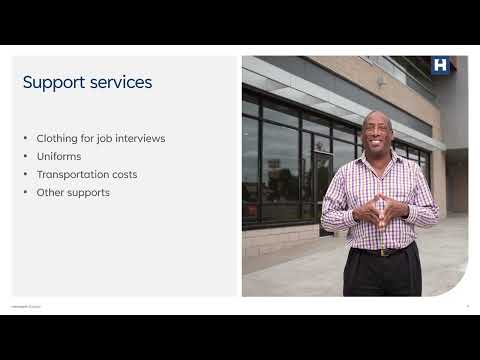
Speakers also emphasized support services meant to address barriers to participation: providers can help with work attire, uniforms, tools, technology, transportation and other needs. Common exemptions listed by the presenter included pregnancy, disability, current enrollment in school and being currently employed; attendees who believe they qualify were told to contact program staff at (612) 596-1300.
To enroll, interested participants were instructed to fill out a registration form via the link shown during the briefing, include name and contact information and the program they are interested in, and await a referral from staff. The presenter also noted a separate link to the state's provider dashboard for searching available programs.
The briefing closed with a reminder that attendees with questions can reach staff by phone or email for help with registration or understanding exemptions and requirements.