Get Full Government Meeting Transcripts, Videos, & Alerts Forever!
Get email alerts on the Military Leave Firefighters Police topic
No spam. Unsubscribe anytime.
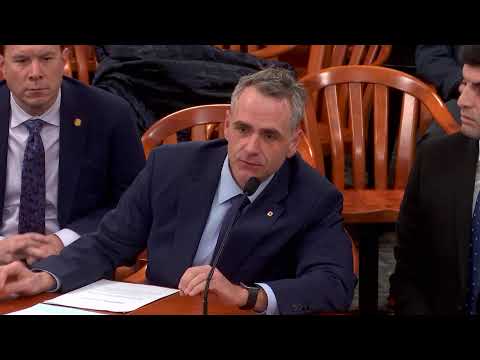
Union and Guard member tell committee paid military leave would ease hardship for firefighters, police
Summary
Witnesses told the House Government Operations Committee that bills sponsored by Representatives Robinson and Colazar to provide 26 paid military days per year for firefighters and police serving in the National Guard or reserves would reduce financial hardship and improve retention; the union estimated roughly 200 career firefighters would be affected.
The House Government Operations Committee heard testimony supporting two bills from Representatives Robinson and Colazar that would grant at least 26 paid military days per year to firefighters and police who are members of the National Guard or reserves.
Matt Saar, president of the Michigan Professional Firefighters Union, told the committee the bills are intended to prevent service members from having to use vacation or take pay cuts to fulfill military obligations. Saar said some career firefighters who serve in the Guard or reserves face a tangible loss of municipal earnings when they are called to duty: “My check was $700 short,” he said recounting a member’s experience, and added that members “don’t get paid when I’m at the reservist” and therefore must use their own time.
Saar told the committee the bills provide 26 paid military days per year so service members can attend required training and annual duty without dipping into vacation. He said the proposal was modeled closely on legislation passed in Tennessee and that he believed other states (a witness cited Texas as a possible example) are considering similar measures. Saar said the union estimates about 200 career firefighters in Michigan would be directly affected.
A chief warrant officer in the Michigan National Guard, introduced by the union and identified in committee remarks as Robert Quinn Upoff, described more than a decade in the reserves and 11 years as a full‑time firefighter. He told the committee that balancing drill pay, family obligations and department duties was difficult and that the leave provision would help retain qualified service members; he also described flying medevac Black Hawk helicopters as part of his Guard duties.
Committee members asked about the scope and precedents. Representative Vanderwall asked how many active personnel would be affected; witnesses said the number is roughly 200 career firefighters statewide. Representative Fitzgerald asked whether other states have a comparable mandate; witnesses cited Tennessee as the close model for the 26‑day figure and offered to provide a more detailed comparison later.
The clerk read public‑comment cards noting that Terry Sabo, deputy director of the Department of Military and Veterans Affairs, submitted a card noting he was not wanting to speak in support, and that Judy Allen submitted a card expressing concerns. The committee did not take additional public testimony and adjourned.