Get AI Briefings, Transcripts & Alerts on Local & National Government Meetings — Forever.
House fiscal analyst outlines how October 2025 tax package reshapes Michigan road funding
Loading...
Summary
House Fiscal Agency fiscal clerk William Hamilton told the appropriations subcommittee that the October 2025 seven‑bill package creates a new Neighborhood Road Fund and raises motor fuel taxes, producing a two‑fund model with estimated increased support for counties, cities and transit but with timing and revenue‑recognition caveats.
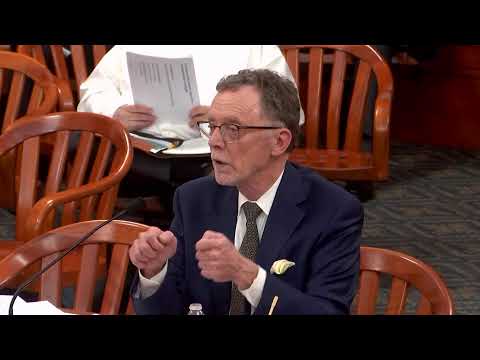
William Hamilton, fiscal clerk for the House Fiscal Agency, told the appropriations subcommittee on state and local transportation that the October 2025 seven‑bill package enacted by the Michigan Legislature creates a separate Neighborhood Road Fund while also changing revenue flows into the existing Michigan Transportation Fund (MTF).
Hamilton said the package increases the state motor fuel tax by 20¢ plus a 1.4% inflation adjustment, making the motor fuel tax 52.4¢ per gallon effective Jan. 1, 2026. He said that change would generate roughly $1.073 billion in additional motor fuel tax revenue on a 12‑month basis but that only a partial amount will be recognized in the 2026 fiscal year because collections will lag the effective date.
"The motor fuel tax is now 52.4¢ per gallon," Hamilton said, noting that the law’s effective date and collection timing mean only eight of 12 months are credited in FY2026. He also said the package immediately eliminates a $600 million individual income tax credit that previously flowed to the MTF, producing a smaller net near‑term MTF gain. On a 12‑month basis Hamilton estimated the net change to MTF revenue at about $350.5 million, with roughly $715 million recognized in FY2026 because of the partial‑year timing.
Hamilton described the new Neighborhood Road Fund as a separate distribution model established by statute in the package (Senate Bill 578 and a newly created Comprehensive Road Funding Act cited in the HFA memo). That fund is financed primarily by two new or repurposed revenue streams: an earmark of corporate income tax revenues and a new wholesale marijuana excise tax.
Hamilton said the corporate income tax earmark is estimated at $688 million credited to the Neighborhood Road Fund in 2026 but cautioned that the earmark comes after other corporate income tax deductions and prior earmarks; he said that to reach the full earmark corporate income tax revenue must be sufficiently high. He also said HFA’s economist estimated the net revenue from the new wholesale 24% marijuana wholesale excise tax at about $417 million (roughly $420 million gross less $3 million for administration), with a partial‑year FY2026 estimate of about $312.8 million. Hamilton emphasized that timing and treasury accounting could affect when those revenues are credited to the fund.
Hamilton outlined the Neighborhood Road Fund distribution: initial set‑asides (for example, $100 million to the local bridge advisory board and $40 million to a local grade separation fund), a $100 million split that directs $35 million to the Comprehensive Transportation Fund and $65 million to the Infrastructure Projects Authority fund, and then the remaining balance allocated to road agencies under an external formula. Under that external allocation Hamilton said the Neighborhood Road Fund directs 52% to county road commissions, 28% to cities and villages and 20% to the state trunk line fund—different from the MTF’s external percentages.
According to HFA’s estimates Hamilton presented, county road agencies would receive an additional ~$408.8 million in 2026 and cities and villages would receive roughly an additional $220 million; Hamilton said the 12‑month run‑rate in the full year following the changes would be higher (closer to the package’s 12‑month totals shown in HFA materials). He advised members that MDOT’s monthly distribution website provides community‑level, routinely updated figures for local finance officers.
Members asked for written, community‑level projections. Hamilton said HFA had previously attempted a detailed community spread but lacked confidence in assumptions required to publish reliable multi‑year local estimates; he recommended that local finance directors consult MDOT’s distribution site for specific monthly allocations.
Hamilton also reviewed other budget impacts: he estimated the Comprehensive Transportation Fund (CTF) would receive about $38 million net in FY2026 from MTF changes (after the loss of auto‑related sales tax attributable to gasoline) and would receive an additional $35 million from the Neighborhood Road Fund column in the first year, plus other one‑time appropriations noted in the transportation budget documents.
On statutory constraints, Hamilton reviewed Act 51’s historical limits on how county road agencies may use MTF dollars—prioritizing primary county roads—and explained that the Neighborhood Road Fund expressly permits, but does not require, the fund to be used to pay 100% of projects on the local (non‑primary) road system. "It’s permissive, not required," Hamilton said, adding that counties and townships will need to negotiate how funds are deployed locally.
Hamilton closed by telling members the HFA memorandum, spreadsheet and flowchart are available on the House Fiscal Agency website and offered to answer follow‑up questions. The committee adjourned with no formal votes recorded on the legislation itself.
This report reflects HFA’s presented estimates and members’ questions; Hamilton repeatedly characterized the numbers as HFA estimates and noted timing and treasury accounting could change when some revenues are actually credited.