Get Full Government Meeting Transcripts, Videos, & Alerts Forever!
Get email alerts on the Interstate Medical Licensure Compact topic
No spam. Unsubscribe anytime.
Michigan committee advances interstate medical licensure compact bill amid physician shortage warnings
Summary
Lawmakers advanced House Bill 54-55 to the Committee on Rules after proponents said renewing Michigan’s participation in the Interstate Medical Licensure Compact is critical to prevent loss of thousands of physicians, especially in rural areas.
LANSING — The Michigan House Health Policy Committee voted to report House Bill 54-55, legislation to continue the state's participation in the Interstate Medical Licensure Compact (IMLC), after proponents warned of a broad impact on physician availability.
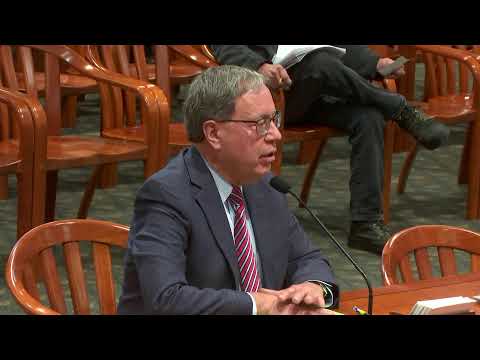
Representative Linting, who presented the bill, described the compact as an interstate agreement currently used by about 40 states to expedite licensure for qualified physicians. "This is especially relevant in rural areas," she told the committee, saying Michigan has participated since 2017 and needs new legislation after an automatic sunset.
Members heard that without action Michigan could face serious workforce losses: Representative (name recorded in testimony) said the Upper Peninsula alone could lose more than 200 physicians and Representative Linting said statewide losses could approach about 4,500 physicians if the compact lapses. Multiple health-care organizations submitted cards registering support but did not speak.
Representative Bonac moved to report House Bill 54-55 with recommendation and refer it to the Committee on Rules; the motion passed in a recorded roll call 14–0. The committee’s action sends the measure to rules for further consideration.
Supporters said the compact speeds the licensing process for qualified physicians and helps maintain access to care; no substantial opposition testimony was offered at this meeting.