
Webster Groves details district AI task force, data protections and classroom pilots
Get AI-powered insights, summaries, and transcripts
Subscribe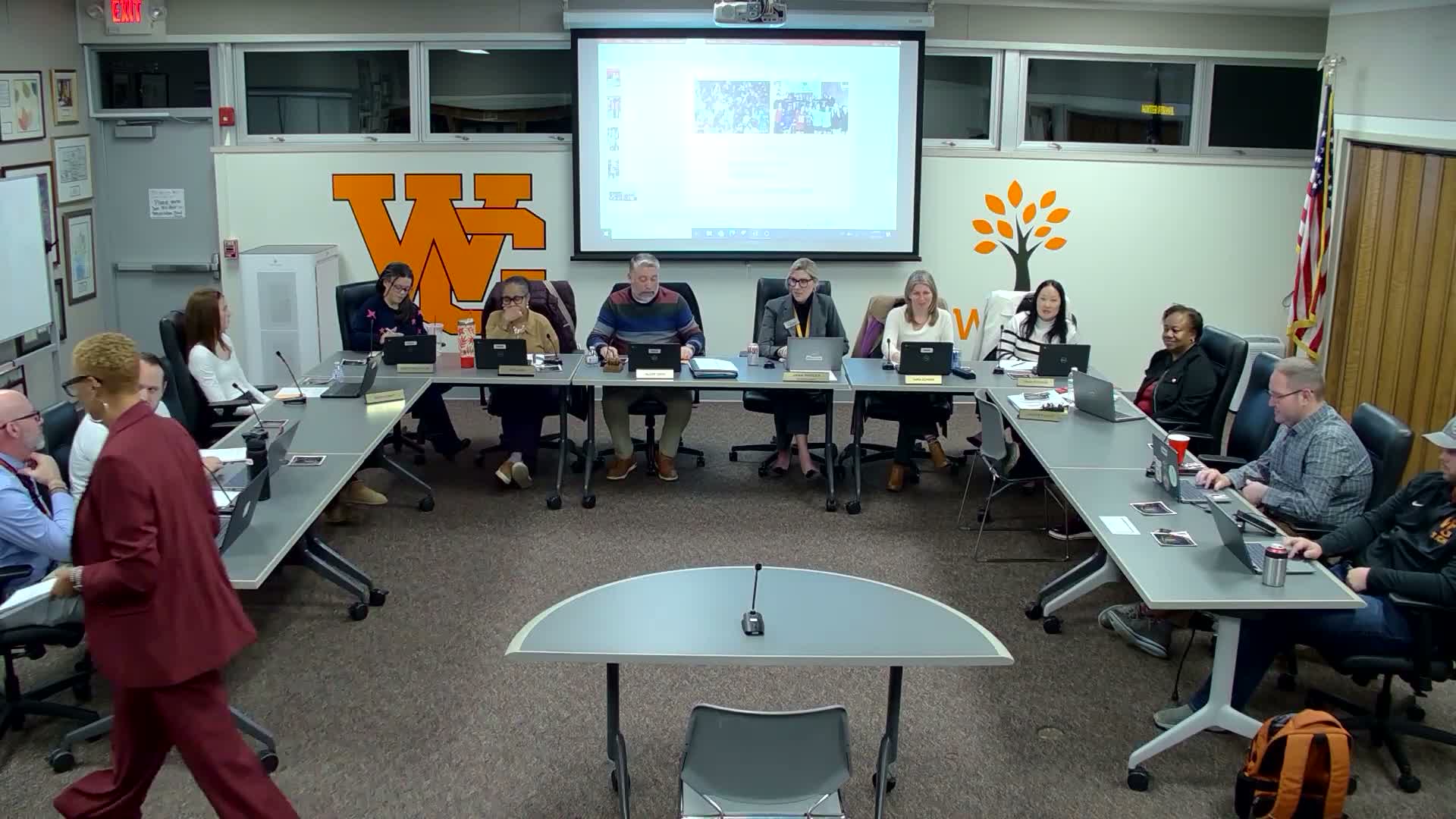
Summary
A district task force recommended an AI framework and policy emphasizing data security, human oversight and rigorous vendor vetting; staff demonstrated prototype 'gems' for family FAQs, lesson generation and student activities and said training and a policy draft are coming this spring.
Webster Groves School District leaders on Tuesday detailed the work of an artificial-intelligence task force that has been developing a district-specific framework for policy, procurement and classroom use.
The task force — more than 50 participants including staff, community members and students — split into three subgroups covering safety and policy, operations and procurement, and teaching and learning. Leaders said the work aims to adapt model language from the Missouri School Boards Association (MSBA) and the wider educational community into "Websterized" guidance that fits local needs.
On data governance and security, presenters said the district will ensure compliance with federal privacy requirements. "The main thing, as with all of our data, is making sure that it stays secure. It complies with FERPA," a task-force presenter said, describing vendor vetting and reporting for unauthorized use as part of the proposed framework.
Operational recommendations included a problem-first procurement rubric, piloting and rigorous vetting for platforms, and staffing transparency to ensure AI augments rather than replaces employees. The teaching-and-learning subgroup demonstrated classroom uses — from standards-aligned lesson planning to interactive activities — and presented a sample AI "gem" configured to answer family questions about assessments and a separate activity for elementary classrooms that can be adapted and deployed quickly.
Presenters emphasized equity, algorithmic-bias awareness and academic-integrity safeguards. "AI literacy is key," Dr. Adams said, adding that expectations and use-cases will vary by grade and content area. Task-force leaders said a draft policy and a platform-selection process will be brought to the board this spring, accompanied by a professional learning plan that will begin in summer.
Student voices were included: Romy, a student member of the task force, said participating changed her view — she called AI "useful" but urged purposeful use and cited environmental impacts as a consideration. Board members urged staff to include parents in literacy and outreach work.
No policy vote was taken Tuesday; staff said policy and platform recommendations will return to the board for consideration.