Get Full Government Meeting Transcripts, Videos, & Alerts Forever!
Get email alerts on the Ihss Labor topic
No spam. Unsubscribe anytime.
Home-care workers press Alameda County supervisors for higher wages and faster bargaining
Summary
A series of IHSS providers told the Board they cannot afford to live in Alameda County and urged faster bargaining and stronger contracts, citing long hours, low pay and reliance on public assistance; supervisors acknowledged concerns but noted negotiations occur in closed session.
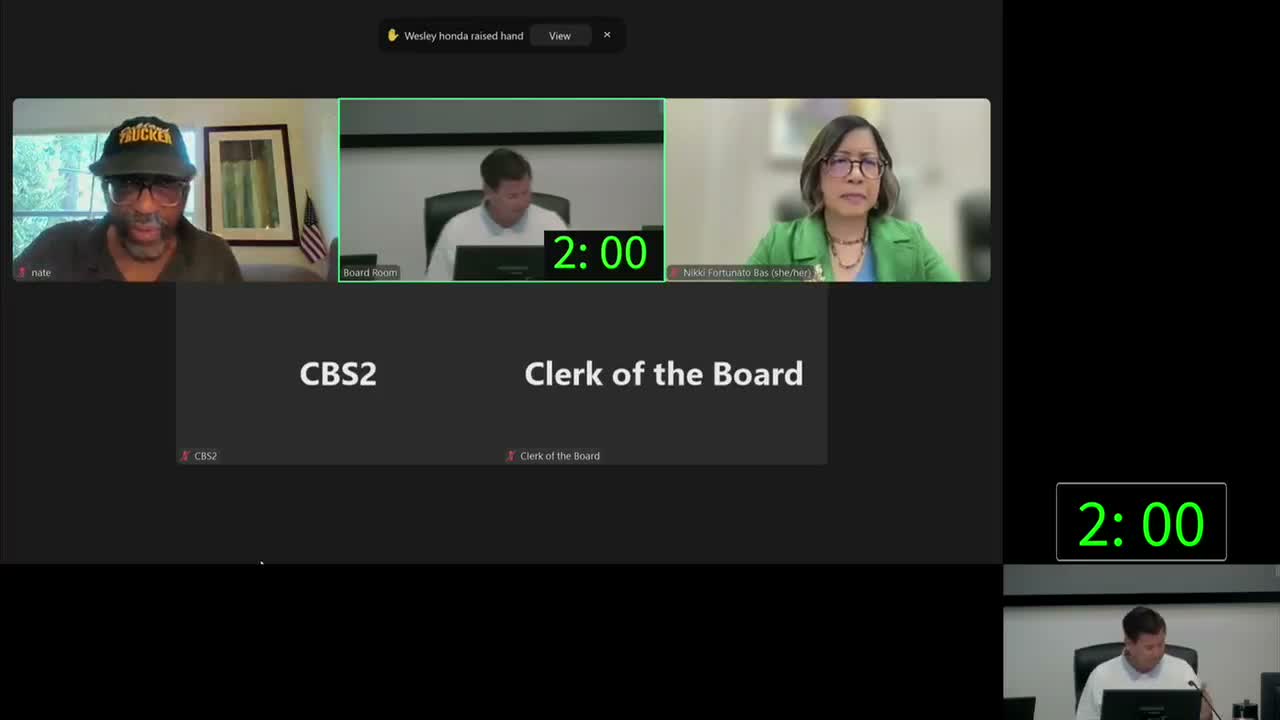
A coalition of in‑home support services (IHSS) providers told the Alameda County Board of Supervisors on March 25 that current pay and benefits are inadequate and are undermining care for county residents.
Speakers representing long-term caregivers and IHSS bargaining teams described years of hands-on care for relatives and clients, noted household financial strain and urged the board to back stronger contractual terms. Cindy Zhang, who said she has been a home worker for more than 13 years, told the board: "We deserve living wage and benefits." Tamara Nisha Kemwa, who cares for an adult son with autism, said many providers work multiple jobs and face housing instability and called for expedited bargaining.
Board President Halbert acknowledged the testimony, thanked speakers and reminded the audience that labor negotiations are handled in closed session with county negotiators. "We don't negotiate in public," Halbert said, while also telling attendees the board hears their concerns and values their work. The board and staff noted there are over 30,000 IHSS workers in Alameda County and said county negotiators continue to engage with bargaining teams.
The public comment record from March 25 shows emotional first‑hand accounts of caregiving and repeated calls for living wages, health coverage for workers who do not qualify for Medicaid, and faster bargaining timelines.