Get Full Government Meeting Transcripts, Videos, & Alerts Forever!
Get email alerts on the Eviction Prevention topic
No spam. Unsubscribe anytime.
Supervisors press for eviction metrics as county extends Housing Secure legal and rental assistance
Summary
Board members asked HCD and tenant‑service providers for disaggregated outcomes and metrics after hearing that Alameda County Housing Secure served over 800 clients in a recent reporting period; staff said data exist but will require compilation and pledged follow‑up.
Supervisors used the Sept. 23 meeting to press county staff and service providers for more detailed outcomes tied to the Alameda County Housing Secure (ACHS) program, which funds eviction‑prevention legal services, emergency rental assistance and outreach.
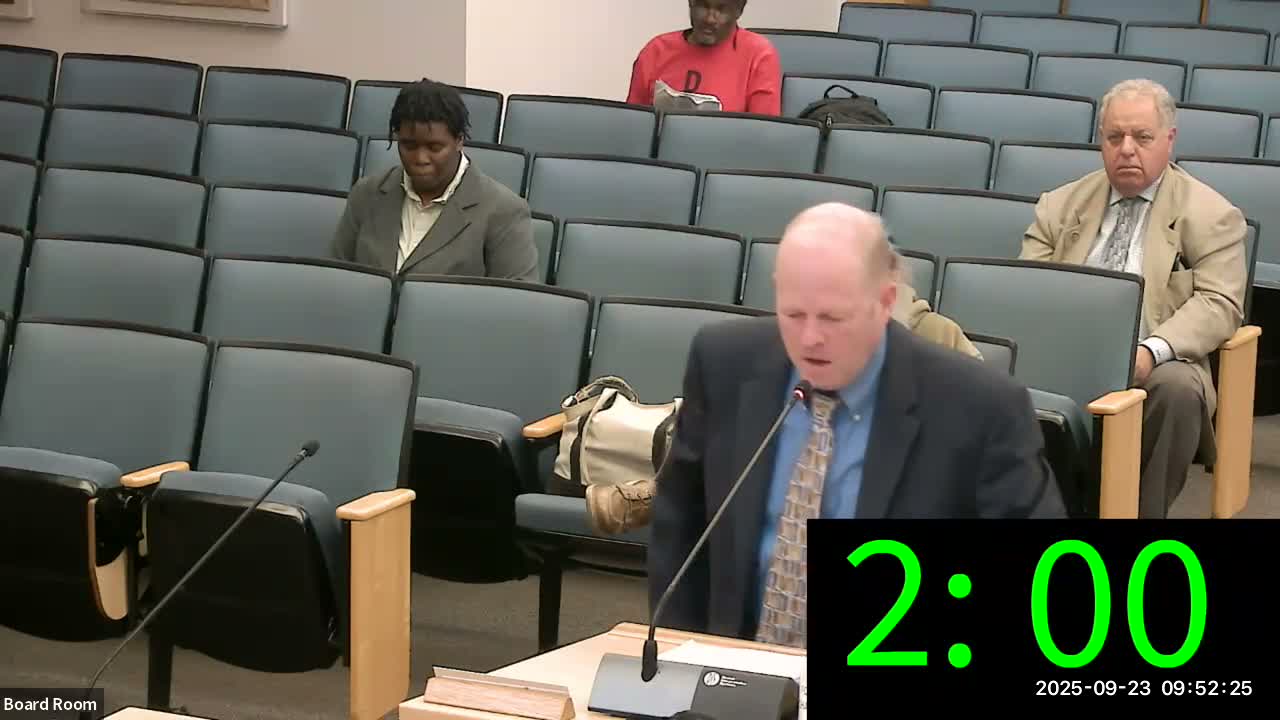
David Hall, interim co‑directing attorney on the Tenants’ Rights team at Central La Raza, told the board ACHS is a “critical safety net” during an eviction wave and reported that between October 2024 and June 2025 the program served more than 800 clients (714 tenants and 86 homeowners), delivered know‑your‑rights presentations to more people than initially proposed, and relied on emergency financial assistance to resolve many disputes before court. Advocates urged the board to continue funding Item 36.
Supervisors asked for specific performance metrics: how many ACHS cases resulted in tenants remaining in their units versus moving; how much back rent was repaid to landlords; ZIP‑code or city disaggregation of filings and service levels; how many settlements involved cash‑for‑keys payments versus payment plans or subsidies; and how many cases invoked habitability defenses. HCD staff and attorneys said some of the requested data are in their databases but are not compiled in the formats supervisors requested and agreed to produce more detailed breakdowns.
HCD staff noted eviction filings remain significantly elevated (2,861 filings in the period cited, about 50% above pre‑pandemic levels) and that the county is developing a dashboard tracking filings by city. Staff said the AC Housing Secure database is a starting point and that a larger homeless‑prevention database tied to Measure W priorities is under development.
Why it matters: Supervisors said granular metrics are essential to assess program effectiveness, allocate Measure W and other funds, and decide on contract extensions or changes. The board emphasized keeping renters housed where possible while ensuring landlords are made whole when appropriate so units remain in the rental market.
What’s next: Staff offered to have data scientists compile the requested disaggregations and to include tenant‑protection items in a Sept. 30 work session for a deeper review of ordinance implementation, outreach and registration/inspection options discussed in the staff report.
Quotes
"We need to identify who is impacted at what level and what's the timeline," Supervisor Marquez said, urging co‑chairs and project management to coordinate efforts.
"The numbers in our database exist — we just need to compile them in the form you want," HCD said in response.
Decisions and votes
Item 36 was included in the mass motion taken by the board and was approved as part of that vote; staff committed to provide more detailed metrics to the board.