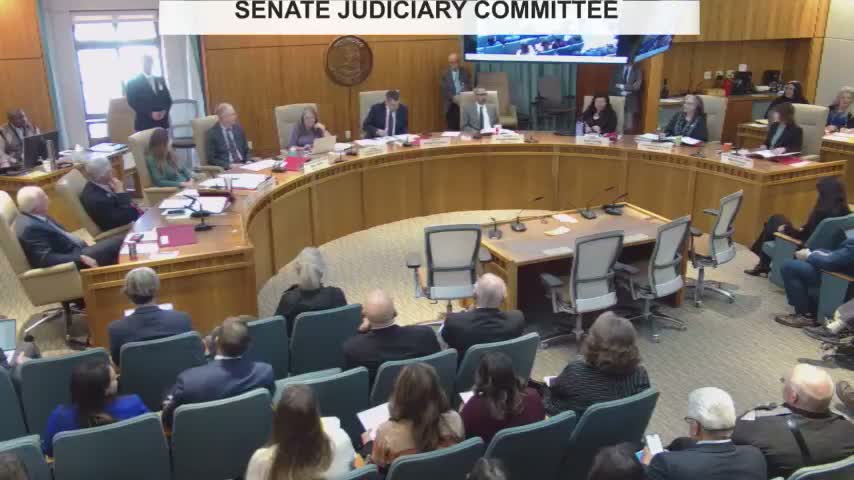
Senate Judiciary advances medical licensure compact after amendments to preserve state authority
Loading...
Summary
After weeks of negotiation, the Senate Judiciary Committee advanced Senate Bill 1 to the floor with unanimous committee support. Sponsors and witnesses said the interstate medical licensure compact will expand telehealth and speed licensing; sponsors also emphasized amendments that preserve state oversight, confidentiality, and protections for reproductive and gender-affirming care.
Senate Judiciary voted to send Senate Bill 1, which would join New Mexico to the Interstate Medical Licensure Compact, to the Senate floor after supporters and the bill’s sponsors described a set of negotiated amendments meant to preserve state authority and patient protections.
Sponsor Linda Trujillo told the committee that the revised bill reconciles twenty-one prior amendments and adds seven new paragraphs intended to clarify authority, records access, investigative procedures and safeguards for New Mexico law. "We added back in a few sentences that made some sense as we began to have the conversation that would help in the definition of what this compact would do," Trujillo said during her presentation, describing edits that restore a preservation-of-state-authority clause and tie confidentiality and subpoenas to New Mexico law.
Why it matters: Supporters said the compact expedites licensing for physicians from other member states and can expand telehealth and access in rural and underserved communities. Fred Nathan of Think New Mexico urged the committee to pass the bill quickly, pointing to research in the fiscal information report projecting a 10–15% increase in physician license applications and saying the compact "expedites licensing" and makes telehealth easier. Alex Flores, an Albuquerque attorney who testified in favor, said the committee’s negotiated edits corrected earlier flaws: "This version corrects those flaws," he said, adding that the bill now preserves state authority and removes total immunity for the interstate commission.
What changed: The committee’s amendments cover multiple topics: restoring a clear purpose statement preserving state licensing authority; changing a statutory drafting error (removing the non‑existent term "gross misdemeanor" and referring offenses back to the criminal code); clarifying that information provided to the New Mexico Medical Board remains subject to state confidentiality and public‑records law; specifying that subpoenas are investigative in nature; and adding a requirement that subpoenas issued as part of joint investigations not conflict with the Reproductive and Gender Affirming Health Care Protection Act.
Implementation and costs: Sponsors said entry into the compact will require rulemaking and technical work before New Mexico can begin issuing compact licenses. Trujillo said the interstate commission estimated roughly six months to start issuing licenses after the state joins, and she told the committee that initial implementation costs were estimated at about $480,000 with ongoing costs thereafter (she cited roughly $180,000 annually and explained about $300,000 would be devoted to building a technology bridge between state and compact systems).
Limits and oversight: Multiple senators pressed sponsors on what New Mexico might lose or gain. Senator Katie Duhigg and others emphasized the compact does not supplant state law; Alex Flores and the sponsors repeatedly said the compact, as amended, preserves legislative authority and accountability for discipline. Chair Joseph Cervantes stressed the committee’s goal was "to first do no harm," noting that New Mexico already has an expedited licensure process and that the committee’s amendments were meant to prevent unintended transfers of authority.
Concerns and caveats: Some members cautioned about realistic expectations. Trujillo and others noted that while applications may rise, empirical studies shared in the hearing suggest the actual increase in out‑of‑state physicians practicing in a state can be smaller (committee discussion cited studies showing roughly a 3% increase in out‑of‑state service provision). Members also asked how the state would monitor whether compact membership results in a net loss of in‑state physician hours and discussed the need for the medical board to track home‑state licensing and practice time.
Outcome: Senator Peter Wirtz moved that the committee give SB1 a do‑pass recommendation; no member objected and the committee recorded a do‑pass to the Senate floor. The committee will transmit the bill and the adopted amendments to the full Senate for further consideration.
Next steps: The bill will appear on the Senate calendar for floor debate and a final vote. Implementation, if the Legislature approves, will require rulemaking by the medical board and technical work to integrate licensing systems.