
District finance staff: state property-tax changes will cut Hamilton City Schools’ revenue by about $3.3 million a year
Get AI-powered insights, summaries, and transcripts
Subscribe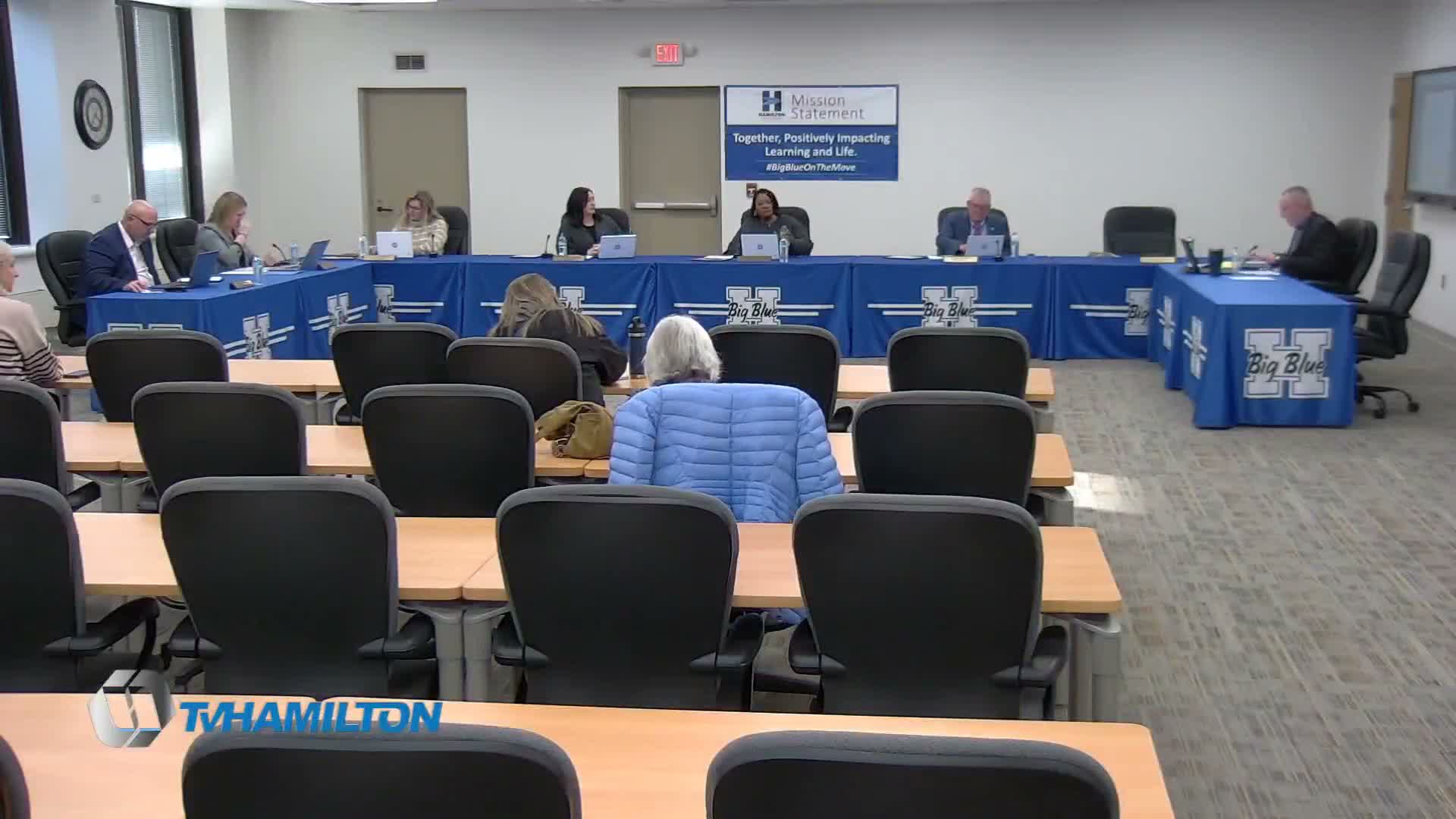
Summary
Finance staff told the Hamilton City School Board that property-tax legislation signed in December will reduce district revenue by roughly $3.3 million per year (up to $3.9 million with a county homestead piggyback) starting in fiscal 2028, driven by CPI caps and retroactive credits tied to the 2023 revaluation.
Mr. Frazier, the district finance presenter, told the Hamilton City School Board that property-tax reform signed by Governor DeWine in December will make an already difficult fiscal picture worse for Hamilton City Schools, reducing local property-tax revenue by about $3.3 million per year — or as much as $3.9 million if the county reenacts a homestead piggyback — beginning in fiscal year 2028.
"This is not good for Hamilton City Schools," Mr. Frazier said during a presentation of the district forecast, explaining the law limits school-district growth tied to reassessments to the consumer-price index and creates retroactive taxpayer credits based on the 2023 revaluation. He said the net effect is lower revenues on the district’s line 6.01 and a materially larger projected deficit than shown in the October forecast.
Frazier showed the district’s cash projections and warned the board the district could move from a modest positive days-cash position to a deeply negative result: under the current model he forecast negative 24 days of cash in fiscal 2029 — roughly a $9 million shortfall in cash on hand — if no other changes occur.
Superintendent Blevins underscored the urgency. "These decisions were not made in isolation," she said. Blevins said the district will continue advocacy at the state level and urged community engagement while the board considers reduction options.
Board members pressed staff on scope. Mr. Frazier and other staff confirmed the law’s caps and the retroactive credits apply specifically to school districts that are on the 20-mill floor and do not impose the same caps on other local governments.
The presentation noted the reform includes a one-year partial backfill but that the full revenue loss appears in FY28. Mr. Frazier also said the county commissioners’ decision to piggyback a homestead exemption this year produced an additional one-time effect of about $584,000; if the commissioners reenact that piggyback in future years it would increase the ongoing impact toward the $3.9 million figure.
The board did not take a vote on the forecast itself; Mr. Frazier said the February forecast will include updated trends and the district will return to the board with a revised forecast next month.
Next steps: the district will present an updated forecast at its February meeting and is preparing a separate budget-reduction plan for 2026–27 to address the projected gap.