
Kingman council weighs half-cent sales-tax option to finish Flying Fortress Parkway and shore up road maintenance
Get AI-powered insights, summaries, and transcripts
Subscribe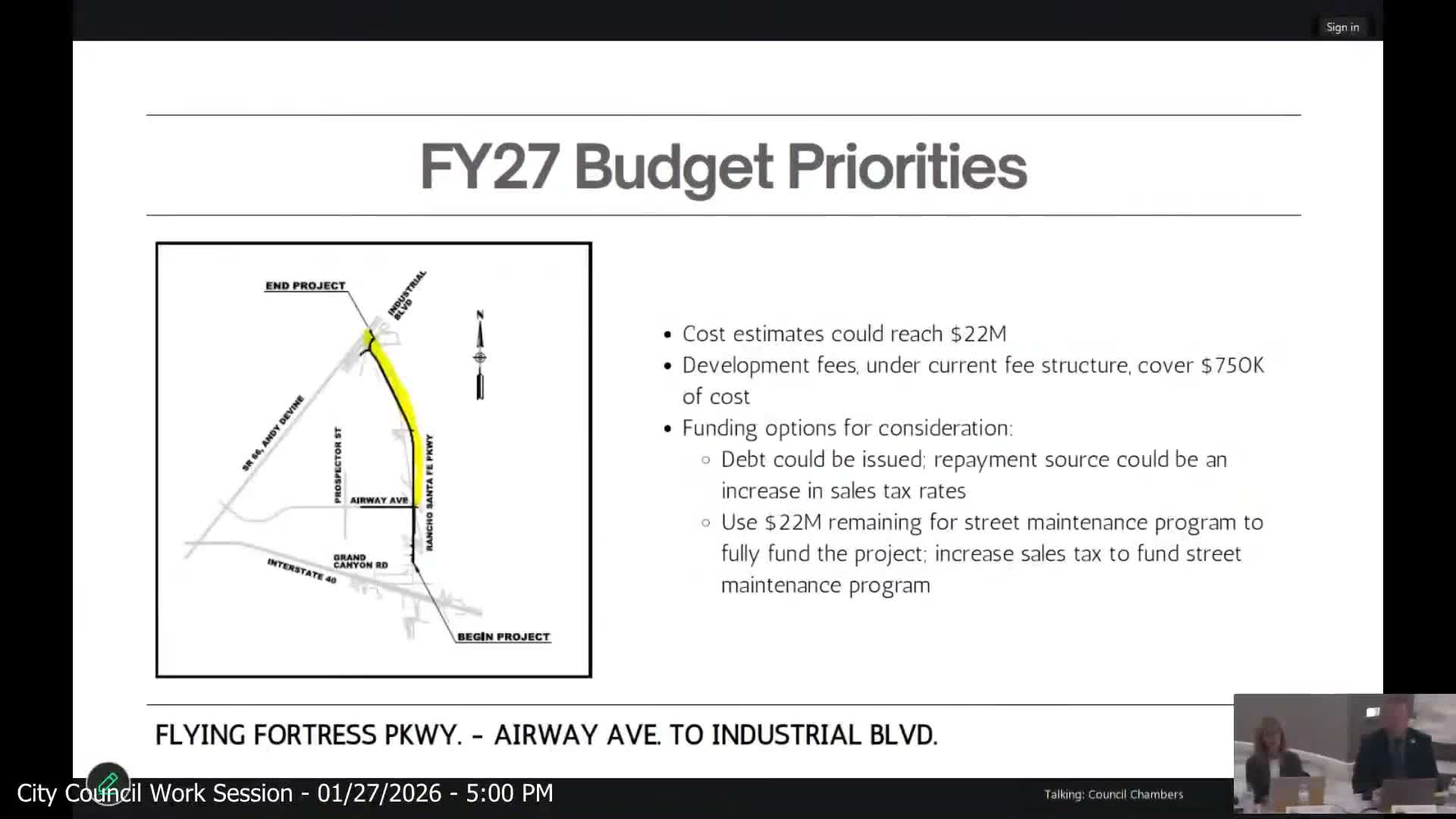
Summary
City staff told the council a half-cent sales-tax increase could raise roughly $5–5.7 million annually and be dedicated to road maintenance; council debated using $22 million in reserves to finish Flying Fortress Parkway now versus issuing debt or approving a tax increase later, and staff noted a recent court ruling gives the council the legal path to repeal a 2018 voter-led restriction on sales-tax increases.
Kingman — City staff told the Kingman City Council on Jan. 27 that finishing the final segment of Flying Fortress Parkway could cost about $22 million and that the council has three broad funding options: use the city’s street-maintenance reserves, issue debt, or adopt a dedicated local sales-tax increase. Staff presented a timeline for a tax measure that would include direction in February, a public hearing in May and a rate effective date of Aug. 1 if approved.
The presentation said a half-cent (0.5 percentage point) increase in the city’s regular sales tax would generate roughly $5.0–$5.7 million a year depending on whether it is applied across all categories or limited to specific categories. Staff emphasized the council could require the revenue be dedicated to roads: “If you move forward with a half percent sales tax increase, you could say we’re looking to increase sales tax by half percent. This would be dedicated to road maintenance and improvements,” staff told the council.
The $22 million price tag is for roadway construction from Airway Avenue to the airport/industrial area; staff said 95% of plans are complete but funding remains the primary barrier. One option staff discussed was using the city’s existing street-maintenance reserves (about $22 million) to pay construction upfront and then implement a dedicated revenue source to restore reserve levels over subsequent years. Staff warned the upfront use of reserves would temporarily reduce the unassigned fund balance to roughly 27–29% of expenditures in the first year—below the council’s informal target of ~35% but above the council’s adopted minimum of 25%.
City Manager Tim Walsh and finance staff framed timing as a central concern: taking action now would avoid future inflation and interest costs and help complete the interchange and road connection that staff said could spur industrial development and additional sales-tax revenue. Staff also pointed to a recent court decision (Payson) that, in staff’s view, allows the council to repeal a 2018 voter-led restriction that previously limited the city’s ability to raise sales tax without voter approval. That legal review underpinned staff’s recommendation that council retain the authority to pursue a repeal if needed to fund long-term maintenance.
Council members asked technical questions about long-term sustainability—whether the forecasted $7 million per year street-maintenance target could be preserved if revenue were redirected—and whether alternative pavement treatments or a mix of repair and replacement had been adequately modeled. Staff said a consultant presentation about alternative road treatments is scheduled for February and that additional detail would be available at the Feb. 17 and May budget sessions.
Next steps: staff offered a sample timeline (direction at a February meeting, notice and a public hearing in May, and an August 1 effective date if adopted) and said more detailed cost modeling and public outreach would follow. The council took no formal vote at the special meeting.