
Public hearing: lawmakers consider creating a well contamination response fund after PFAS contamination incidents
Get AI-powered insights, summaries, and transcripts
Sign Up Free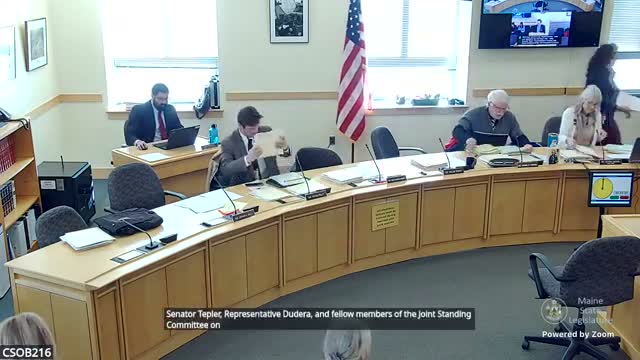
Summary
At a public hearing on LD 2115, the sponsor proposed repurposing an unused monitoring fund into a Well Contamination Response Fund to pay for PFAS testing, remediation, filtration upkeep, bottled water and municipal connections; DEP urged narrowing eligibility and clear statutory guidance because funds and agency capacity are limited.
The committee held a public hearing on LD 2115, a bill to rename and repurpose an unused 'land contaminant monitoring' fund as a 'well contamination response fund' to help private well owners pay for testing, remediation, filter maintenance, bottled water and, where necessary, connection to public water systems.
Sponsor Representative Dan Ancoles framed the bill as statewide but informed by the August 2024 AFFF release at the former Brunswick Naval Air Station and proposed a sponsor amendment that would prioritize wells with PFAS at or above 20 parts per trillion (ppt), reincorporate soil and groundwater sampling authority, and add an ongoing position shared between DEP and the Maine CDC to administer the program. "Guaranteeing access to clean drinking water seems like it ought to be a high enough priority to transcend core partisan disagreements," Ancoles told the committee.
DEP Bureau Director Suzanne Miller testified neither for nor against the bill and supported legislative direction but recommended narrowing the fund’s statutory scope to PFAS only and setting clear eligibility limits in statute rather than relying on a potentially lengthy rulemaking process. Miller warned available funds and department capacity are limited and cited program cost projections, including an estimate that equipping every private well with filters could exceed $1 billion.
Residents of Brunswick and other witnesses described local impacts from the AFFF release: repeated PFAS spikes in private wells, households purchasing bottled water or paying tens of thousands of dollars to connect to municipal water, and slow responsible-party action. Advocates (Defend Our Health, NRCM, Maine Conservation Voters) urged broad eligibility and coordination with existing income-based assistance programs; technical witnesses discussed the higher cost and limited lab capacity for PFAS testing and treatment options ranging from point-of-use carbon filters to reverse-osmosis systems.
Next steps: the committee requested additional technical input for the work session, including Maine CDC health guidance and cost estimates for testing and filtration system options, and the analyst will present sponsor amendment language for consideration at the work session.