
After hours of testimony, committee advances bill to let parents sue for wrongful death of an 'unborn child'
Get AI-powered insights, summaries, and transcripts
Subscribe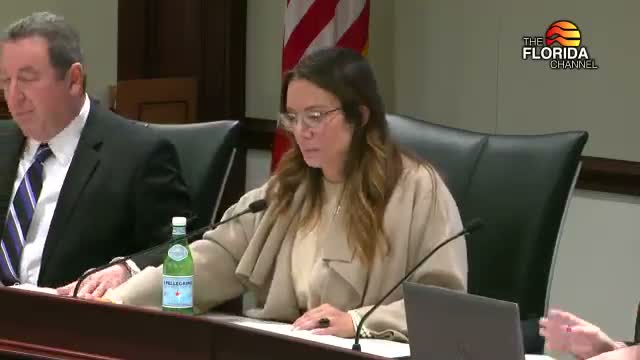
Summary
After extended public comment and debate, the committee reported SB 164 favorably. The bill would let parents recover wrongful‑death damages for an 'unborn child' defined as a member of the species homo sapiens 'at any stage of development' carried in the womb; opponents warned it could create broad civil liability affecting IVF, abortion‑related care and support networks.
The Senate Appropriations Committee on Criminal and Civil Justice reported SB 164 favorably after extensive public testimony and floor debate. Senator Erin Grahl, the sponsor, said the bill would extend the Wrongful Death Act to permit parents to recover civil damages when an unborn child dies because of another’s negligence and that the statutory definition mirrors language already used elsewhere in Florida law.
Sponsor’s description and intent
Senator Grahl said the bill adds an explicit wrongful‑death cause of action for the parents of an unborn child defined as “a member of the species homo sapiens, at any stage of development who is carried in the womb.” She framed the measure as aligning civil remedies with protections that already exist in criminal law and described the proposal as giving grieving parents a consistent civil avenue to seek recovery under the Wrongful Death Act.
Opposition concerns raised in testimony
Multiple witnesses and organizations opposed the bill during a prolonged public‑comment period. The ACLU of Florida warned the bill’s broad language could allow “any person who impregnates someone else” to sue—potentially including abusers or casual partners—and could expose health‑care providers, friends, family and many businesses to unlimited wrongful‑death damages when a fertilized egg does not result in birth. The ACLU attorney said the bill could chill medical care and harm prenatal and specialized care by increasing malpractice exposure.
Medical‑insurer testimony (The Doctors Company) warned of higher malpractice costs and reduced availability of OB‑GYN care. Multiple survivors and advocates described real risks for survivors of sexual violence and domestic abuse, arguing the bill could be used by abusers as a legal tool to intimidate survivors and their supporters.
Proponents and sponsor response
Supporters including Florida Voice for the Unborn and other faith‑based advocates described the bill as “life‑affirming” and urged passage. Senator Grahl and backers said existing criminal law already uses similar language and that civil cases will fail when plaintiffs cannot show the required evidentiary elements; they also emphasized that statutory elements of wrongful‑death law (proximate cause, proof of likely birth, etc.) remain in place and can limit speculative suits.
Committee debate and vote
Senators spent substantial time debating whether the bill fills a gap in the law or creates new legal exposures. Critics argued the state already recognizes negligent stillbirth causes of action and warned the change could unlock personhood claims and expanded litigation; proponents emphasized parity in statutory treatment and parental remedies.
On roll call, the committee recorded four senators voting yes in support of the measure and three voting no; the clerk announced SB 164 was "reported favorably." (Transcript: Simon, Wright, Yarbrough, Vice Chair Martin and Chair Garcia voted yes; Osgood, Polsky and Smith voted no.)
What the bill would do in practice
If enacted as written, the bill would permit parents to bring wrongful‑death claims on behalf of an unborn child described by the statutory definition, with damages available under the Wrongful Death Act. Transcript discussion identified several unresolved questions that would shape court practice and impact: how early in gestation courts would find sufficient evidence that a child would have been born, whether civil immunity provisions similar to those in criminal statutes should be imported to protect providers and patients, and how the law would treat embryos created via assisted reproductive technologies.
Next steps
The committee reported SB 164 favorably; the transcript records extended testimony and disagreement about scope and potential unintended consequences. The bill’s practical effect would depend on subsequent committee action, floor amendments, and how courts interpret the interaction between wrongful‑death remedies and existing statutes and case law.