
Nonprofit lender explains private student loans, expands PA Forward and Keystone outreach to border states
Get AI-powered insights, summaries, and transcripts
Subscribe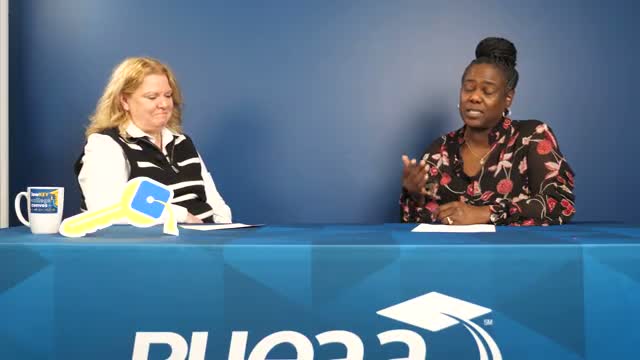
Summary
On the Higher Education Access Corner podcast, host Tiffany DeVan and Dr. Kim McCurry of the Pennsylvania Higher Education Assistance Agency (PHEAA) discussed when private (alternative) student loans are used, repayment trade-offs, and PHEAA's PA Forward and Keystone products and outreach resources for Pennsylvania and neighboring states.
On the Higher Education Access Corner podcast, host Tiffany DeVan and Dr. Kim McCurry, an account executive at the Pennsylvania Higher Education Assistance Agency (PHEAA), discussed private (alternative) student loans and how families should evaluate them when federal, state and institutional aid do not fully cover college costs.
"Alternative or private education loans are just one of the ways," Dr. McCurry said, explaining that families should exhaust grants, scholarships and federal student loans before considering private borrowing. She urged students and families to begin researching private options well before bills are due, noting that credit approvals for private loans typically last about 180 days.
Why it matters: Private loans can fill gaps on college bills but carry costs that affect household budgets and future borrowing. McCurry emphasized that families should consider monthly repayment amounts, the effect on a cosigner's credit and debt-to-income ratio, and whether multiple children or overlapping enrollments will compound borrowing.
PHEAA's products and state coverage Dr. McCurry described two nonprofit products used by PHEAA: the PA Forward Student Loan (funded in part with public bonds) for Pennsylvania residents, which can be used for schools in or outside Pennsylvania; and the Keystone Student Loan program, introduced about 18 months earlier, for residents of neighboring states who attend schools outside Pennsylvania. "Our Keystone states can get all of the access to all of the resources that we're giving to our Pennsylvania learners as well," she said.
She provided approximate rate guidance, saying Keystone loans are "around 11%" and PA Forward loans "around 10%" on the higher side, with variable rates that can rise; she added that borrowers may see rates as low as about 3% depending on repayment choices. Repayment-term options discussed were 5-, 10- and 15-year plans, with choices to make immediate principal-and-interest payments, interest-only payments for a period, or to defer repayment while in school.
Borrower features and refinancing McCurry said PHEAA offers borrower incentives including an auto-debit reduction (noted as roughly 0.25 percentage points) and a graduation credit, and she described a refinance product for consolidating private loans after leaving school. She also highlighted free outreach resources produced for counselors and students, including a student aid guide, timelines and scholarship tips.
How to research and get help McCurry recommended that students check a school's preferred or historical lender lists, use tools such as ScholarNet's FastChoice, and compare rates, fees and repayment options across lenders. For counselors and institutions seeking materials or contacts for the Keystone footprint, she pointed listeners to keystonestudentloans.org for account executive contacts and to fea.org/order-online to request free, Keystone-branded outreach materials.
Cross-state eligibility and upcoming products On residency questions, McCurry said Pennsylvania residents would borrow PA Forward; border-state residents attending schools outside Pennsylvania would use Keystone. She noted aggregate borrowing maximums exist and said PHEAA plans additional borrowing options in health professions fields.
Closing The episode closed with McCurry encouraging families to plan ahead and have candid conversations about affordability, and with an announcement that she will launch a new podcast, "Low Key College Convos," intended for higher-education professionals in states bordering Pennsylvania.