
Deschutes County split over Conquest Road gate permit; road staff urges denial and code rewrite
Get AI-powered insights, summaries, and transcripts
Sign Up Free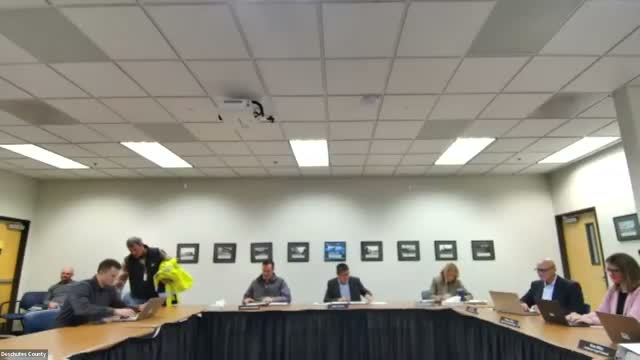
Summary
The county's road department recommended denying a gate permit for Conquest Road in the Eastbourne subdivision, citing land-use conflicts, emergency access and precedent; commissioners signaled they want a new ordinance and asked staff to return with options and potential permit conditions.
On Jan. 26, 2026, the Deschutes County Board of Commissioners debated a contested gate-permit application (G-25-01) for Conquest Road in the Eastbourne subdivision after the county engineer recommended denial.
County Engineer Cody Smith told the board that under ORS 368.056 county governing bodies have authority to issue permits for gates on county roads, but road staff concluded the Eastbourne proposal raises multiple legal and operational problems. Smith said road staff's four central concerns were: (1) land-use conflict because converting the gated segment to a de facto private road would bypass subdivision rules that require a PUD or cluster-development review; (2) emergency-response delays and potential liability even with rapid-entry systems; (3) interference with utility providers' statutory access to rights of way; and (4) precedent and administrative burden because similar local-access dead-end roads exist across the county.
Smith summarized the application: Conquest Road is approximately 0.72 miles; the proposal would gate the northerly 0.27 miles and place five lots entirely behind the gate with two partially behind it. He told commissioners the road was platted in 2025 and was constructed to local-subdivision standards but is a local-access road, not county-maintained.
Road staff recommended denial and asked the board to rescind Resolution 90-81 (adopted in 1990) as part of a process to develop modern code language. Smith told the board staff intends to draft proposed ordinance language and policy options in the coming months and said the 1990 resolution's $100 fee and lack of public process are now problematic.
Applicant statements and commissioners' views
Applicant counsel and the applicant told the board they believe the application meets the existing resolution's standards and urged a merits-based decision. In public comment the applicant (recorded in the minutes as Jason Weathers) said the gate was not originally a design element but that he "went above and beyond" to satisfy the stated criteria and asked for earlier clarity from staff about the process.
Commissioners asked detailed questions about who paid for road improvements (staff said the developer), whether pedestrian-only or limited gates could reduce impacts, and whether conditions could mitigate the county's concerns. Some commissioners voiced support for denying the current permit until new code is adopted; others signaled willingness to resolve this single case with conditions and bring a permit to a near-term consent calendar.
What happens next
Road staff was directed to propose permit conditions that would mitigate emergency-access and utilities concerns and to return with draft code language. Staff said the code rewrite would take months and could be targeted for work this summer; staff also indicated they would prepare permit paperwork for a near-term consent agenda unless commissioners instruct otherwise. No final vote on the permit was taken.
Authorities and procedural notes
The record includes a staff reading of ORS 368.056 and multiple references to Resolution 90-81 (1990). Road staff told the board that past county practice included 22 gate permits issued since 1990 but that current staff issues just a few (five in the past nine years) and is generally reluctant to allow gates that create private-access conditions without a land-use process.
The board's policy direction — whether to deny the current application now or to proceed with a code rewrite and treat this application later — was left to follow-up work by the road department.