Get Full Government Meeting Transcripts, Videos, & Alerts Forever!
Get email alerts on the World Languages topic
No spam. Unsubscribe anytime.
Students urge board to keep UW Japanese as world language adoption advances
Summary
Students from Chiawana High School asked the Pasco School Board to retain third-year UW Japanese offerings while district staff outlined a world language curriculum adoption process that aims to recommend core materials for Spanish, French and Japanese for 2026–27 implementation.
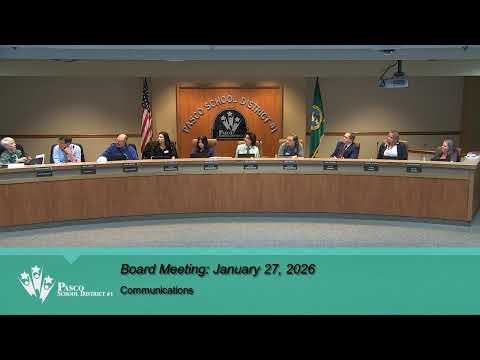
Students and district staff framed the same issue from two perspectives at the Pasco School Board meeting: students pleaded to keep a UW-delivered Japanese course at Chiawana High School, while the district described its committee-driven adoption process for world language core materials.
Students: Several Chiawana High School students told the board that removing third-year UW Japanese would disrupt academic pathways and exchange relationships. Thao Po said the course provides a head start on college-level work and strengthens cultural understanding; Anthony Garcia and Tata (students) described how the Yamate exchange and cohort learning have broadened their horizons and asked the board to retain UW Japanese at Chiawana. Students said about 40 sophomores and juniors currently participate and warned that removing the course would leave some students without a path to complete the program.
District report: The district’s world language representative outlined the adoption process under policy 2120: committee formation, pre-screening of materials, three-week field tests for each candidate curriculum, rubric-based evaluation and teacher/student field testing. Staff said cost has not been the deciding factor so far; the committee prioritized instructional quality and alignment to learning standards. The presenter listed candidate materials under consideration (Spanish: Somos, Descubre, and another title; French: De Accord and T’ai Branche; Japanese: Adventures in Japanese) and said the goal is to present final recommendations aligned with contract timelines for implementation in the 2026–27 school year.
Board questions and next steps: Board members asked how field testing was conducted (three weeks per curriculum), whether cost will factor into the final selection (staff said quality and rubric criteria have been primary to date), and whether American Sign Language is part of this adoption (staff said ASL is not part of this world languages process and is considered under CTE offerings). The district plans to narrow selections, present to the instructional materials committee, and then return to the board with a final recommendation.
What’s next: Staff will continue field testing feedback collection and bring narrowed recommendations to the instructional materials committee and then to the board; students and community stakeholders were urged to provide input through those processes.