
CHSD 99 board reviews midyear finances, approves Honeywell audit agreement to evaluate energy projects
Get AI-powered insights, summaries, and transcripts
Subscribe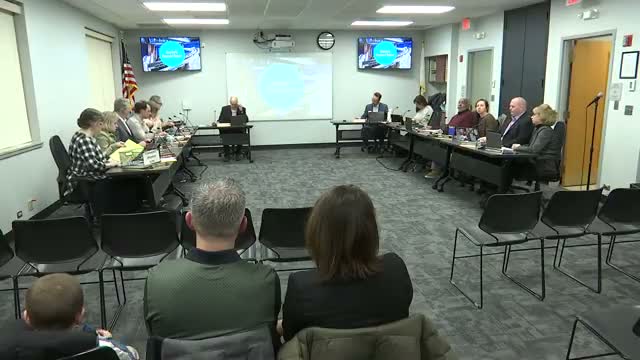
Summary
District finance director reported about 90% of revenues collected, a projected $400,000 midyear revenue shortfall tied to state aid, and fund balances near expected midyear levels. The board approved an investment-grade audit agreement with Honeywell to evaluate potential capital projects and savings.
The CHSD 99 Board of Education on an evening meeting heard a midyear financial report from the district finance director and approved an investment-grade audit agreement with Honeywell to evaluate potential energy and capital projects.
Juri, the district finance presenter, told the board the district has “collected, as you can see, roughly 90% of our revenues for the year,” noting that “the majority of our revenues are in property taxes,” and that an additional $400,000 in replacement taxes announced in August appears likely to materialize. She said interest earnings “could be a little less than what we had originally projected,” and estimated the current revenue shortfall at “about 400,000.”
The nut of the board’s finance discussion focused on fund balances and planning. Juri reported the district’s operating funds stand at roughly $61,000,000 and described the midyear shortfall as planned for the first year of a new DGA contract. Board members and staff discussed long-term targets for reserves; Juri said a 3% board policy target is “pretty low” and recommended aiming for 5%–6%, while others noted 10% as a comfortable emergency level.
Board members and staff flagged timing and external risks that make reserves valuable: delayed property-tax distributions, proration of state categorical aid and cuts to CPPRT were cited as recent examples that forced districts elsewhere to borrow short-term funds. Juri explained that deferred property-tax timing can make some districts appear to have larger fund balances at year-end once taxes are accounted for.
After the finance discussion, the board considered a proposed investment-grade audit agreement with Honeywell to assess a package of potential projects — including energy, life-safety and facility upgrades — and to independently evaluate projected savings. Travis and other staff explained the audit carries a potential fee of up to $169,572 but emphasized the district would only be obligated to pursue projects if the independent evaluation confirms the projected savings. Travis said staff expect final audit results in March and an April decision point to proceed with projects if warranted.
The board voted to approve the Honeywell agreement. According to staff, if the projects are fully realized and demonstrate the projected savings, they could yield an estimated $100,000–$500,000 in surplus annually over the next 20 years, depending on scope.
The board identified next steps: staff will complete the audit work, report results in March, and bring any recommended projects back for board consideration. The finance presentation and the Honeywell agreement were both presented as measures to protect operations while pursuing capital and energy efficiencies.