Get Full Government Meeting Transcripts, Videos, & Alerts Forever!
Get email alerts on the Riverfront Redevelopment topic
No spam. Unsubscribe anytime.
County analysis outlines economic gains, questions and next steps for Mount Clemens riverfront plan
Summary
Macomb County presented conservative economic modeling for a mixed-use riverfront development and flagged a $2 million state placeholder; commissioners pressed for underlying data, clarity on the Oakland University purchase due diligence (Sept. 1), boat access, brownfield remediation and historic preservation.
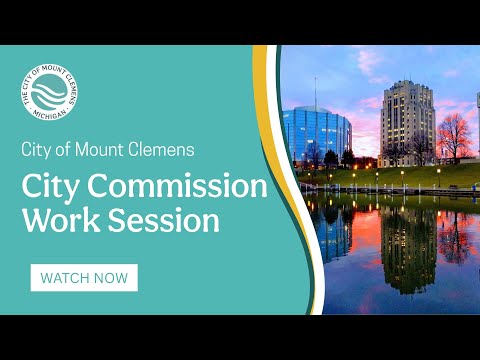
Macomb County staff told the Mount Clemens City Commission at a work session that a mixed-use redevelopment of the riverfront and downtown Oakland University property could produce measurable economic benefits, while commissioners pressed for more detailed analyses and timeline clarity.
"This concept received a $2,000,000 appropriation from the state of Michigan," John Paul Ray, who led the county presentation, said as he described a partnership between the city, Oakland University and the county to repurpose the Anton Frankel Center and adjacent riverfront parcels. Ray said county analysts ran a conservative Lightcast model that envisioned a 90–100 unit multifamily development with commercial and restaurant space.
Ray summarized the modeling results: "There could be a more than $2,400,000 sustained economic impact," he said, adding the scenario could spur "more than 6 dozen jobs" and produce roughly $375,000 to $500,000 in annual tax revenue depending on scale. He told commissioners the county would share the underlying economic report and data with the city manager and commissioners on request.
Why it matters: Commissioners said the numbers are useful but incomplete without the modeling assumptions, market inputs and a clear schedule for the city's purchase and feasibility work. The commission is weighing whether to buy Oakland University's building and relocate municipal functions as a way to free riverside land for redevelopment.
Key details and next steps
Purchase agreement and timeline: City staff and county presenters said the city has a purchase agreement with Oakland University and is in a 60-day due diligence period that runs to Sept. 1, with a contractual provision allowing a 30-day extension. Commissioners asked for all sale documents and feasibility materials in one package; Ray and staff agreed to send the Lightcast report and the county's site-readiness materials to the city manager for distribution and follow-up.
Costs and state support: Commissioners and staff discussed the building price cited in the meeting — $1.5 million — and the state's $2 million placeholder for the strategy. Ray said some of that appropriation is intended for engineering and site-readiness work; he added that final funding for construction, remediation or relocation would depend on subsequent grant and incentive discussions with state agencies.
Environmental and brownfield issues: Commissioners raised whether any parcels (including the fire department site) would qualify for brownfield remediation. County staff said standard environmental screening (Phase I/II) is part of site readiness work and that federal EPA/EGLE programs and county revolving funds could be explored to remediate hazardous materials or obsolescence issues.
Boat access, river cleanup and jurisdiction: Residents and commissioners pressed the panel about debris and navigation at Shadyside and along the Clinton River. Staff said waterway control and large dredging operations are outside the city's direct authority (drain commission/Army Corps) but noted prior grant-funded cleanup and volunteer work by the Clinton River Watershed Council. Ray said steady current improvements at the weir are helping flush debris and that targeted cleanup efforts can be pursued in partnership with county and state partners.
Historic preservation and community priorities: Several commissioners, citing Mount Clemens' mineral-bath and downtown character, urged the commission to consider historic preservation as part of the redevelopment plan. Ray said the upcoming assessment work will include options ranging from basic upgrades to full rehabilitation, and that the city can prescribe community priorities through RFP/RFQ conditions, community benefit agreements or development agreements.
Procurement and consultant role: Staff explained how an RFP/RFQ and an owner's representative (consultant) could be used to produce a site-readiness analysis and best-use studies. Commissioners discussed fee structures (percent-based vs. flat fees) and asked staff to outline a process that would bring potential developer proposals and recommended community stipulations back to the commission.
Scheduling and public engagement: Commissioners debated moving an August 20 work session to ensure quorum and time to review materials ahead of the September due-diligence deadline; staff agreed to check presenter availability and distribute the county's report in advance. Ray encouraged continued county support and follow-up meetings with commission members and city staff.
What the meeting did not decide: There was no final vote to buy property, to approve an RFP or to select a developer. The only formal action recorded in the transcript was a routine motion to adjourn, which carried by voice vote.
Quotes (selected)
"You are all in the driver's seat," Ray said, urging the commission to set nonnegotiables in any RFP or community benefit agreement. "Your city not only has a voice in this conversation, frankly, you will lead it."
Commissioner McGarity expressed skepticism about model outcomes and requested all supporting documents: "I just have a lot of questions... there's nothing in front of me, but that's why I'm asking the questions."
Next procedural steps: County staff will provide the Lightcast economic report and site-readiness materials to the city manager, who will distribute them to commissioners ahead of the scheduled work session; the purchase agreement due-diligence window expires Sept. 1 (with a possible 30-day extension).