Get Full Government Meeting Transcripts, Videos, & Alerts Forever!
Get email alerts on the Ukraine Humanitarian Crisis topic
No spam. Unsubscribe anytime.
Security Council briefed on severe civilian toll, infrastructure damage and urgent funding shortfall in Ukraine
Summary
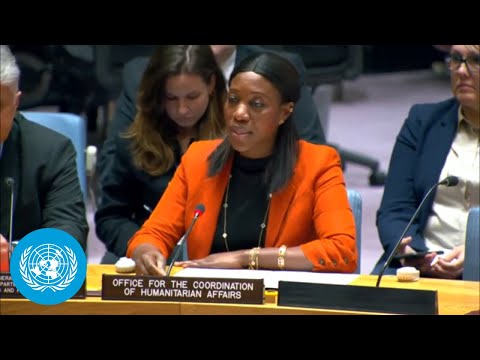
A U.N. briefing to the Security Council outlined thousands of civilian casualties, the displacement of about 10 million people, repeated attacks on health and education facilities, and a major funding gap that threatens humanitarian operations in Ukraine.
A United Nations briefing to the Security Council on the humanitarian situation in Ukraine said the country is enduring some of the worst attacks since the war began, with daily strikes killing and injuring civilians and damaging critical infrastructure across multiple regions. The briefing noted that no part of Ukraine has been spared and that frontline and border communities continue to experience heavy hostilities.
The presenter reported that more than 10,810 civilians have been killed and more than 20,550 injured since 24 February 2022, and that about 10,000,000 people have lost their homes and been forced to flee since the escalation of the war. The briefing identified Donetsk, Kharkiv, Kherson and Sumy among the regions driving new waves of displacement and said women and children remain disproportionately affected and face additional barriers to essential services and protection risks, including gender‑based violence.
Attacks have disrupted basic services such as electricity, water and gas for hundreds of thousands of civilians, and the World Health Organization has verified more than 1,700 attacks affecting health‑care facilities, personnel, transport, supplies and patients since February 2022, the briefing said. Those incidents, the presenter added, have significantly hindered delivery of health care, including maternal and reproductive health services, particularly in rural and front‑line areas.
The Office of the High Commissioner for Human Rights has reported damage to or destruction of about 1,000 educational facilities, interrupting education for millions of children. The briefing also said more than 1,500,000 children are in urgent need of psychosocial support to manage the stress and anxiety associated with ongoing hostilities.
Humanitarian operations are increasingly precarious, the presenter warned. So far in 2024 two humanitarian workers have been killed and 10 injured, bringing total reported deaths of humanitarian personnel to at least 17 since the escalation of the war. The briefing detailed 14 reported incidents that damaged humanitarian assets and facilities (including eight within 10 kilometers of front lines). Over a recent weekend the humanitarian hub in Zaporizhzhia was hit, and a Médecins Sans Frontières office in Donetsk region was destroyed by a missile attack, injuring five civilians and temporarily suspending MSF medical activities in the area.
The briefing described a pattern in which emergency responders who rush to assist after an attack are then targeted in follow‑on strikes, compounding casualties and reducing the capacity of first responders. The presenter recalled obligations under international humanitarian law to spare civilians and civilian objects and to protect humanitarian personnel, and stressed that parties must allow and facilitate rapid and unimpeded passage of relief to civilians in need.
The session also highlighted risks to global food security. Continuing attacks on Odessa and its port infrastructure were described as a threat to Black Sea grain exports and to the progress made in stabilizing grain markets and lowering global prices. With high levels of food insecurity in parts of the world, the briefing said safe navigation in the Black Sea and protection of port‑related civilian infrastructure are essential.
On funding, the presenter said donors have provided $541,000,000 — roughly 17% of a $3,100,000,000 appeal for the humanitarian response in Ukraine — enabling assistance to about 3,000,000 people in the first two months of 2024 but leaving a significant shortfall. United Nations agencies and many local partners have provided food, psychosocial support for survivors of conflict‑related gender‑based violence and other supplies, but the briefing warned that more financial resources are urgently needed to sustain operations as hostilities escalate.
The presenter urged the Security Council to take action to ensure respect for the rules of war, pursue a path to peace and help bring an end to the death, destruction and hardship the briefing described. The presiding officer then thanked the briefing and opened the floor to Council members who wished to speak.