Committee declines to advance preparedness resolution on council size after 2-2 tie
Loading...
Summary
A resolution (RS 20 26 17 59) to begin planning for possible changes to Metro’s council size if Metro loses Metro v Lee at the U.S. Supreme Court failed in committee after a 2-2 tie; the chair cast the tie-breaking negative vote. Sponsors had proposed a brief floor explanation and intended withdrawal.
A committee vote to advance a resolution aimed at preparing for possible changes to Metro Nashville’s council size stalled Wednesday after an evenly divided vote and a tie-breaking negative vote by the chair.
The resolution, listed as RS 20 26 17 59 and identified on the agenda as sponsored by Benedict, would have authorized staff work on how council districts and at-large seats could be adjusted “should the Metro v Lee matter” be decided against the city at the Supreme Court. The sponsor told the committee they planned to explain the proposal on the full council floor and then withdraw the resolution.
The sponsor described the measure as planning and transparency: “So, this resolution is about looking at the council size should the, Metro Legal lose the case in the Supreme Court,” the sponsor (Speaker 2) said, adding the intent was to give the public more visibility into contingency planning.
Committee discussion centered on timing and optics as much as substance. An unidentified committee member warned against acting prematurely and urged deference to legal procedures: “Elephant in the room ... I think we need to sit back and let those chips fall where they will,” (Unidentified committee member, Speaker 6) said, arguing that the Supreme Court’s deliberations should not be clouded by the council’s preparatory actions.
Councilmember Johnson (Speaker 3), who moved the motion to send the resolution to the floor, said the goal was preparedness given a short window before the August 2027 election but also cautioned against suggesting the council’s actions could influence the court. “To say that the Supreme Court ... would make or change their decision on a constitutional matter based on this body being proactive ... is just really actually disrespectful to the court,” Johnson said.
Councilor Suarez (Speaker 7) opposed the resolution as premature and said it would signal surrender if pursued now: “I’m gonna believe on till the end of the day that we’re gonna win this ... I do not want a reduction,” Suarez said.
Council Member Gabbard (Speaker 4) thanked sponsors for convening planning meetings and suggested the sponsor present the status of plans on the floor if the resolution moved forward.
A committee member noted that an amendment from Berkeley Allen would change the timeline for deliverables, shifting the due date to 90 days following resolution of the Metro v Lee matter, though the amendment’s other specifics were not detailed during the discussion.
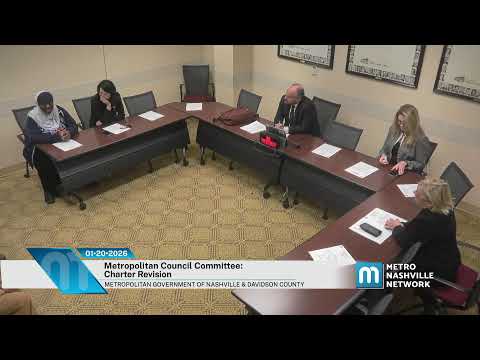
When the motion was called, the committee split evenly; the clerk reported a 2-2 division. The chair cast the tie-breaking negative vote, and the motion to advance RS 20 26 17 59 to the council floor was therefore disapproved.
The chair (Speaker 1) said the committee will reconvene immediately after any Supreme Court decision and invited all council members to participate in follow-up planning: “If we win then the Constitution of Tennessee will have been vindicated ... If the court fines against us, I will immediately call a meeting of this committee ... to start discussing exactly what the decision says,” the chair said.
No formal report deadline or additional budgetary authority was adopted; the committee’s action was procedural and did not direct staff to begin work. The resolution remains listed as RS 20 26 17 59 on the agenda and, according to sponsors, could be revisited depending on the Supreme Court outcome.
The committee adjourned shortly after the vote.