
Teachers' union presents grievance over Ralston Schools' personal-leave practice change
Get AI-powered insights, summaries, and transcripts
Subscribe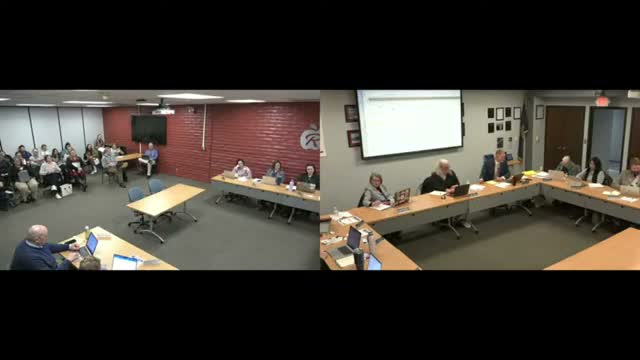
Summary
At a Ralston Public Schools board meeting, the REA filed a grievance alleging administration imposed a midyear interpretation requiring approval for routine personal leave; administration defended the change as limited, citing substitute shortages and two high-school days where a 10% threshold would have applied. The board moved to closed session; a written decision is due within seven calendar days.
The Ralston Education Association told the Ralston Public Schools Board of Education on Wednesday that the district unilaterally changed how it handles personal-leave requests by implementing a system that requires principal approval for requests outside the contract''s narrowly defined circumstances.
"We respectfully maintain that the administration's interpretation and practice of section F4 since November 2025 is a unilateral, unauthorized change in contract terms and past practice," REA representatives said during the grievance presentation. Alicia George, identified as REA president, urged the board to review the contract language and past practice.
REA said section F4 was negotiated to require approval only for leave that extends a school break or occurs in the first two weeks of school, and that the 15% quantitative staffing threshold added later was intended to narrow administrator discretion only within those limited circumstances. Stacy Stockel, REA treasurer and lead negotiator, emphasized that personal days historically could be entered in the district's absence system without prior approval except for the enumerated high-impact times.
District officials defended the November change as an operational response to a persistent substitute shortage and to protect instructional continuity. A district administrator (speaking during the meeting) said the contract text and structure support allowing administrators discretion to deny personal leave when a building exceeds 10% absence on a given day. The administrator supplied district-level data showing two days in the first semester at Ralston High School where absences approached the threshold and where filling substitute coverage had been difficult.
Board members asked whether the system could instead automatically notify principals of personal-leave entries without enabling denial, sought clarity on how the November rollout was communicated to buildings, and whether any teachers had been formally denied personal leave. REA said implementation timing differed by building and that some principals issued temporary "blackout dates" for specific days. REA reported several instances of teachers canceling planned personal days because no substitute could be found, but said it had not yet confirmed formal denials in every case.
Speakers on both sides proposed negotiating a permanent fix at the bargaining table: REA reiterated it would sit down to discuss sustainable solutions, and administration said it was open to negotiations but argued the contract text as written gives the district limited discretion for operational mitigation. The board moved the issue into closed session for further discussion and was reminded by staff that the written grievance decision must be issued within seven calendar days under the grievance procedure.
What happens next: the board will continue deliberations in closed session and issue a written decision within the timeline specified by the grievance process. REA asked the board to consider past practice, contract language, and whether a system notification (without denial authority) could provide the operational visibility administrators say they need.