Get Full Government Meeting Transcripts, Videos, & Alerts Forever!
Get email alerts on the Transmission And Storage topic
No spam. Unsubscribe anytime.
RETA reports progress on major transmission lines, emphasizes long-duration storage and community safeguards
Summary
The Renewable Energy Transmission Authority updated the oversight committee on multiple transmission and storage projects—Sunsea/Sunzia, Crossroads Hobbs Roadrunner and an Eastern New Mexico connector—urging policy work on long-duration storage and responding to questions about interconnections, endangered species and water impacts.
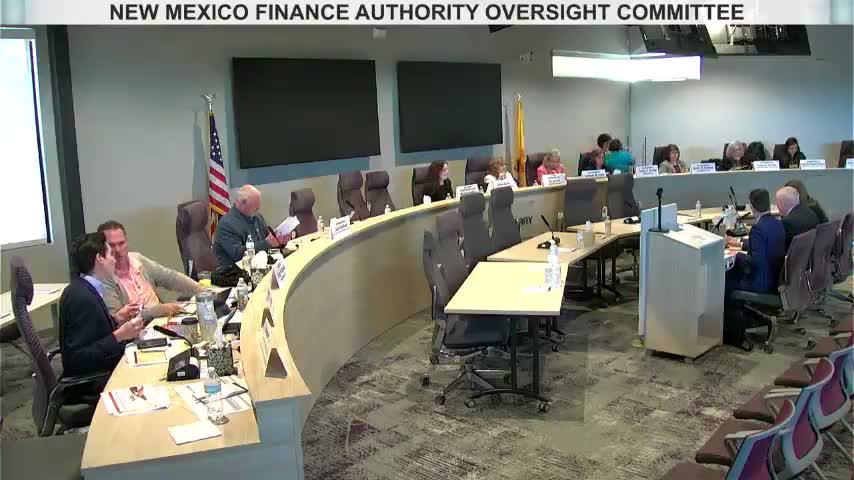
The Renewable Energy Transmission Authority (RETA) presented its annual update to the oversight committee, highlighting construction milestones on major transmission projects and raising the need for long-duration energy storage as New Mexico expands renewable generation.
Bob Busch, RETA chair, described recent transmission scale and demand: "3,000 megawatts... That's half of all the power that's used in New Mexico," he said when discussing the Sunsea (Sunsea/Sunzia) transmission line. RETA executive director Lynn Mosteller reported that some transmission projects are on fast schedules (Crossroads Hobbs Roadrunner is under construction and expected in service in 2026) and that an Eastern New Mexico connector is in early-stage development and would be a multi‑phase, long‑lead project if completed.
RETA emphasized storage policy and technology. Staff held a recent storage workshop attended by utilities, national labs and tribal leaders to explore long‑duration storage options — not just four‑hour batteries — and policy changes to speed deployment. RETA said it will continue stakeholder engagement to identify storage policies appropriate for New Mexico.
Committee members raised questions spanning economics, regional markets and community impacts. Representatives asked about the Tres Amigos/Eastern Interconnect (RETA and Busch said the earlier Tres Amigos project is not proceeding), the role of RTO and day‑ahead markets (EDAM and SPP market proposals are active), and whether RETA has weighed in on taxation or revenue sharing for exported renewable energy; RETA said it has not taken positions on taxation and cautioned that generation taxation could be passed to consumers.
Lawmakers also sought assurances about environmental reviews and local impacts. RETA described permitting workflows and said transmission easement agreements contain reclamation language; it also described negotiated routing and mitigation work on habitat issues (the Crossroads project required stakeholder negotiations involving lesser prairie chicken habitat). RETA said federal processes such as NIETC (National Interest Electric Transmission Corridor) have been handled clumsily from a stakeholder-engagement standpoint and RETA has distanced itself from aspects the agency considers heavy-handed.
What’s next: RETA will continue project permitting and stakeholder outreach, pursue storage policy work, and provide updates as projects move from early development to construction and testing.