Hunterdon Central superintendent reports midyear progress, flags 2026–27 budget pressure
Loading...
Summary
Superintendent presented a midyear status update highlighting completed initiatives on mental health resources, student supports and facilities planning, outlined a 3% math proficiency target and announced strategic planning on Feb. 17; she warned the 2026–27 budget faces pressure from rising health care and utilities costs.
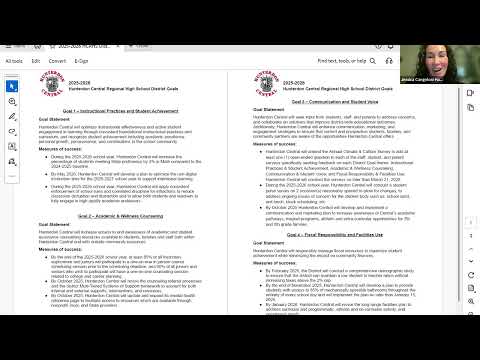
Superintendent Candelosi Haide delivered a midyear progress report to the Hunterdon Central Regional High School Board, saying the district had “already achieved several key milestones at this midyear point,” while urging caution as the district prepares for the 2026–27 budget cycle.
Haide told the board the district has updated and expanded its mental-health resources web page (deployed in October 2025) to connect families with nonprofit and state providers and completed a seventh-and-eighth-grade marketing plan, including a successful magnet program showcase and middle-school visits. The board previously approved a major amendment to the long-range facilities plan in November 2025 and authorized architect services in December to meet a January 2026 deadline.
On instruction, Haide said administrators are pursuing a 3-percentage-point increase in math proficiency and reinforcing tiered supports: the district has updated its MTSS plan, protected RTI staffing to ensure intervention coverage each block, and will launch weekly invitational tutorials during lunch. The superintendent also described steps to reduce classroom distractions through weekly principal and vice-principal meetings and distribution of a code-of-conduct chart to students, families and staff.
Haide described counseling priorities shifting from senior college and career planning toward junior scheduling and additional one-to-one sessions for underclassmen. The district reported integration of a Tier-3 social worker and efforts to strengthen referral partnerships with community-based organizations and NJ4s.
On facilities and operations Haide said the district implemented a plan to ensure at least 85% of mechanically operable bathrooms are accessible, increased lab supervision during instructional blocks, and adjusted morning supervision assignments. A demographic study is scheduled for February to inform staffing and budget decisions.
Haide closed by noting budget pressures facing the 2026–27 fiscal year, citing “increasing health care and utilities costs” discussed earlier by the business administrator and assistant business administrator. She urged continued stakeholder engagement as strategic planning begins Feb. 17 and asked the community to participate in the five-year planning process.
The board took no immediate budget action on Haide’s report; strategic planning sessions and follow-up committee work were set as next steps.