Get Full Government Meeting Transcripts, Videos, & Alerts Forever!
Get email alerts on the Education Policy Trends topic
No spam. Unsubscribe anytime.
Education Commission of the States briefs Maine committee on national K–20 policy trends
Summary
A delegation from the Education Commission of the States told Maine lawmakers the major national trends include paid pathways and residencies for teachers, moves toward student‑based K–12 funding formulas, expansions in school choice programs, and growing state activity around student health and early childhood workforce supports.
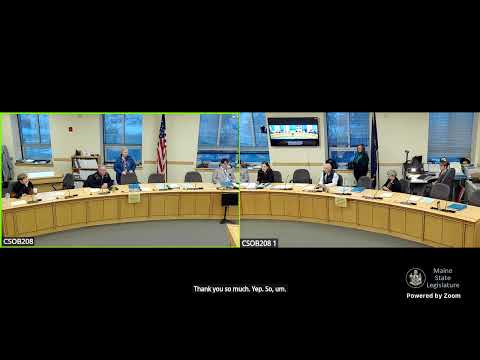
A delegation from the Education Commission of the States (ECS) briefed the Maine Legislature’s Joint Standing Committee on Education and Cultural Affairs on recent national trends in education policy, offering state examples lawmakers said they would use while the 2026 legislative session advances.
"The classroom is the single most important in‑school factor affecting student achievement," Joel Moore, Director of State Relations at ECS, said as he opened the panel’s presentation, framing the briefing around teacher policy, funding, school choice, student health, and postsecondary strategies.
Why it matters: Committee members said the overview gave them immediate reference points for bills under consideration in Augusta. ECS emphasized that the trends are not endorsements but examples from other states that have recently enacted or considered policy changes.
Key points and state examples - Teacher pipelines and compensation: ECS highlighted paid pathways for student teachers, teacher residencies, and stipends as strategies to recruit and retain teachers. Moore cited Tennessee’s Future Teacher Scholarship (grants up to $3,500 per year for up to three years) and legislative reforms in Washington State to formalize teacher residency approvals. New Mexico and South Carolina were named among states that raised minimum salaries or offered broad pay increases; Moore noted New Mexico’s House Bill 156 as a flat $5,000 increase raising a minimum salary to about $55,000 in that example.
- K–12 funding formulas: ECS described a national shift toward student‑based funding formulas that set a per‑student base amount with supplemental weights for groups such as English learners and students with disabilities. Alabama’s RAISE Act was presented as an example that launched a student‑based formula with an initial $166 million first‑year investment and oversight bodies to monitor implementation.
- School choice: Moore reviewed recent expansions in universal education savings accounts, vouchers, and tax credits in several states, citing Texas Senate Bill 2’s universal ESA program (including $1 billion in appropriation) and Idaho’s refundable Parental Choice Tax Credit (up to $5,000, expanded to $7,500 for students with disabilities).
- Student health and early childhood: The ECS team summarized mental‑health screening proposals (Louisiana), expanded cardiac emergency planning in schools (West Virginia), and states redefining school‑meal standards and access (Arkansas example for universal free breakfast beginning 2025–26). On early childhood, ECS noted states addressing workforce compensation, subsidy eligibility, zoning, and capacity via grants and other supports.
How ECS supports state policymakers: Annie Gianni and other ECS staff said the organization provides 50‑state comparisons, rapid information requests (3–4 day turnarounds), and connections to state experts. Committee members asked about AI guidance and cell phone bans in schools; ECS said it has produced resources on both topics and will share them with the committee.
Next steps and materials: ECS confirmed it will share the slide deck and resource memos to committee staff. Lawmakers asked for follow‑up data and contacts in other states when they pursue legislation modeled on examples presented.
Committee reaction: Members thanked the ECS team for succinct examples and requested that ECS help make peer contacts available for implementation questions—particularly around classroom‑level guidance for cell phone policies and AI resources for K–12 contexts.
The committee moved next into public hearings and work sessions on state bills after the ECS briefing.