Lifetime Citizen Portal Access — AI Briefings, Alerts & Unlimited Follows
Maine Labor Relations Board tells Legislature it operates effectively and is modernizing filings and mediation
Loading...
Summary
The Maine Labor Relations Board told the joint standing committee on Labor that it functions with experienced panels and staff, has modernized e-filing and training, and is processing elections and complaints in a timely manner; staff offered follow-up on compensation and appointment questions.
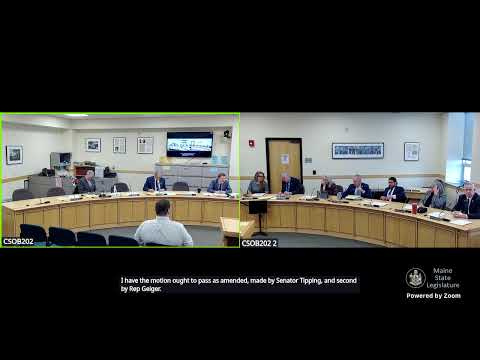
Neil Daley, executive director of the Maine Labor Relations Board, told the Legislature’s Labor Committee that the board “operates ultimately in an effective manner,” highlighting experienced tripartite panels, mediator capacity and several recent procedural innovations.
Daley said the board’s mission remains enforcing public‑sector collective bargaining laws and resolving disputes through certification, mediation, fact‑finding and arbitration. He told the committee the board has handled unit clarification petitions and elections promptly — citing 16 clarification petitions with four hearings and about 72 elections since the last report — and that majority sign‑up petitions are generally certified in roughly two weeks.
Why it matters: the MRB’s work affects roughly 100,000 public‑sector employees in Maine across nearly 500 employers, and the committee’s Government Evaluation Act review can produce a legislative report by March 15 with recommendations or requests for additional information.
Daley described several steps aimed at reducing burdens on parties: an e‑filing system with fillable PDFs that removed a notarization requirement, an upgraded website including mediator bios and a searchable collective bargaining agreement database, and annual free trainings that include CLE credit. He said the panel of mediators now balances neutrals, recently retired union representatives and retired employer representatives to increase credibility and settlement rates.
On adjudication, Daley reported 135 prohibited‑practice complaints filed since the last GEA report: 92 were resolved or withdrawn without hearing, 14 were dismissed by the executive director, and 21 hearings produced written decisions; four appeals to the courts were filed and none of those decisions were overturned. He noted mediation settlement rates of about 65 percent and that only a small share of fact‑finding requests proceed to a hearing before a tripartite panel.
Committee members raised operational questions. Senator Bradstreet asked whether a chair who begins a multi‑day hearing may be replaced midstream; Daley said that while a change is technically possible, the board avoids that practice. Representative Drinkwater pressed about low statutory per diems for arbitrators ($100 historically), asking whether the committee should study rates in neighboring states; Daley said he will gather comparative information and noted the BAC per diem was increased more recently to $300 a day and $150 for deliberations.
Daley also pointed to the board’s rulemakings to enable e‑filing and other technology updates, and described modest cost savings from shifting court reporting to an external service and outsourcing some billing tasks. He suggested the committee could ask for follow‑up information on compensation comparisons and staffing and invited members to contact him for additional details.
The committee did not make a formal motion on the MRB at the meeting; staff noted the GEA review process gives the committee until March 15 to prepare a report to the Legislature.