Get Full Government Meeting Transcripts, Videos, & Alerts Forever!
Get email alerts on the Juvenile Escape Disclosure topic
No spam. Unsubscribe anytime.
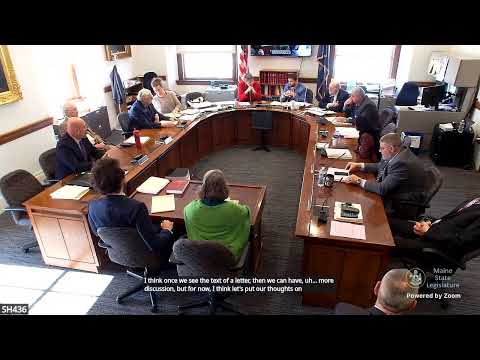
Committee tables juvenile escape-notification amendment after debate on scope and safeguards
Summary
An amendment to let the Department of Corrections disclose limited details about escaped juveniles — physical description and recent/likely location but not names or photos — was presented and debated; concerns about scope, inclusion of law-enforcement custody escapes and the possible use of photographs led the committee to table the bill for further drafting and a written amendment.
Associate Commissioner Christine Thibault of the Department of Corrections told the committee the proposed amendment (to Title 15, MRSA) would let MDOC "publicly disclose" limited information to identify or apprehend a juvenile who escaped from a DOC facility and who "presents a serious risk to themselves or others." The amendment would permit a physical description, recent or likely locations and instructions not to approach the juvenile; it would not allow MDOC to release the juvenile's name or photograph to the public.
Assistant District Attorney Tanya Pearson and lawmakers discussed distinctions between escapes from DOC custody and escapes from law-enforcement custody or transport. Pearson explained statutory classifications: "Escape from a law enforcement officer is a class D offense. Escape from a facility is a class C offense," and said the original DOC proposal had been broader than escapes from Long Creek alone. Several lawmakers urged broader language to cover probation and transport escapes; others urged caution and a written amendment to review potential unintended consequences of releasing identifying information, particularly photographs.
Representative Argyle moved to table the amendment to obtain a written copy and allow more thorough stakeholder review; Representative Perkins seconded and the motion passed. The committee did not adopt the amendment in this session; members asked DOC and stakeholders to refine language for a future session.
What happens next: the amendment is tabled; the committee requested a written draft and further stakeholder consultation, including possible inclusion of judicial review or law-enforcement stakeholders if scope is broadened.