Lifetime Citizen Portal Access — AI Briefings, Alerts & Unlimited Follows
UN briefing warns of rising civilian toll, weapons-diversion risks in Ukraine
Loading...
Summary
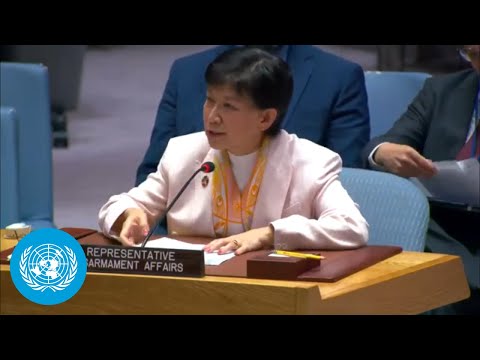
Ms. Itsumi Nakamitsu told the Security Council that Russia's full-scale invasion continues to cause heavy civilian casualties and infrastructure damage, citing OHCHR-verified figures of 11,126 killed and 21,863 injured since Feb. 24, 2022, and warned of weapons diversion and escalation risks.
Ms. Itsumi Nakamitsu addressed the United Nations Security Council to warn that the Russian Federation's full-scale invasion of Ukraine "launched in violation of the United Nations Charter and International Law" continues to inflict a severe humanitarian toll.
She told the Council that the conflict has produced "high numbers of civilian casualties and massive destruction of civilian objects and infrastructure," disrupting energy supplies and vital services including health and education. "The use of armed uncrewed aerial vehicles and missiles continues to cause civilian deaths and injuries as well as damage to civilian infrastructure," she said.
Nakamitsu cited figures verified by the Office of the High Commissioner for Human Rights (OHCHR), saying that since Feb. 24, 2022 the war "has killed 11,126 civilians and injured 21,863," and that "the actual figures are likely to be considerably higher." She added that the number of civilian casualties documented in May was the highest since June 2023.
She flagged the growing humanitarian risks posed by cluster munitions, mines and explosive remnants of war, saying those devices "can contaminate communities for decades to come, posing a daily and deadly danger to women, men, and children, and hampering reconstruction efforts."
On military assistance and arms transfers, Nakamitsu listed heavy conventional weapons reportedly provided to the Ukrainian Armed Forces, including battle tanks, armored combat vehicles, combat aircraft, helicopters, large-caliber artillery systems, missile systems, uncrewed combat aerial vehicles, remotely operated munitions, and small arms and light weapons with ammunition. She also said there have been reports of states transferring or planning to transfer weapons such as uncrewed aerial vehicles, ballistic missiles and ammunition to Russian forces and warned that any transfer "must take place consistently with the applicable international legal framework, including, of course, relevant Security Council resolutions."
To address the risk of diversion and further instability, Nakamitsu recommended supply-chain transparency and cooperation among importing, transit and exporting states. She listed counter-diversion measures including enhanced marking, record-keeping and tracing; comprehensive pretransfer diversion risk assessments and non-transfer certificates; post-shipment verifications; diversion monitoring and analysis; effective physical security and stockpile management; and strengthened customs and border-control measures.
She cited international arms-control instruments and tools in this context, including the Arms Trade Treaty, the firearms protocol against illicit manufacturing and trafficking, the Programme of Action on small arms and light weapons and its International Tracing Instrument, and a global framework for conventional ammunition management.
Closing her briefing, Nakamitsu urged all parties to avoid actions that could escalate the conflict or lead to miscalculation and reiterated the need for a just and lasting peace in line with the UN Charter, international law and relevant General Assembly resolutions. The Council President thanked her for the briefing.