Get Full Government Meeting Transcripts, Videos, & Alerts Forever!
Get email alerts on the Municipal Budget topic
No spam. Unsubscribe anytime.
Fountain presents a conservative, balanced 2026 budget with reserves above policy target
Summary
City staff told the council the two-year 2025–26 budget is balanced, the general fund reserve sits well above the 20% council goal (projected ~35–38%), and several one-time federal grants and intergovernmental contracts are boosting capital spending while staff recommend holding external IGSA dollars until receipts clear.
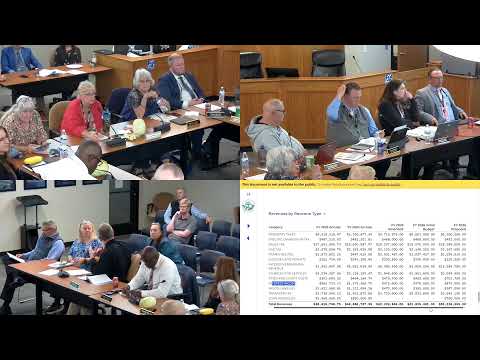
The Fountain City Council reviewed a conservative two-year budget proposal that staff say keeps the city’s operating plan balanced while preserving a larger-than-required reserve. City Manager Scott Trainor and Finance Director Shauna Dale told the council the city ended 2024 with unexpectedly strong revenues and now projects an unassigned/TABOR-adjusted fund balance of roughly 38.3% for 2025 and roughly 35.8% for 2026, both above the council goal of 20%.
Dale said the 2026 budget reflects a cautious approach: "We intentionally being very conservative and very careful," and noted some accounting changes—most notably consolidating administrative costs into the general fund for a more transparent cost-allocation—explain part of a large near-term expenditure increase in 2025. She said each one percentage point of the general-fund reserve equals about $460,000.
Why it matters: the city’s reserve target is intended to provide three months of operating liquidity for emergencies and to preserve the municipality’s credit standing. Council members and staff emphasized balancing competing priorities: one-time external funds and grant awards could fund capital projects, while operating increases tied to ongoing programs should be paced only after revenues are realized.
Support and constraints: staff identified roughly $11.6 million in net general-fund revenue increases for the budget cycle, driven by federal grants (including an EPA brownfields award) and intergovernmental service agreements (IGSAs) tied to Fort Carson work. However, Dale and the city manager recommended not programming IGSA revenue until the city has the cash in hand: "We won't bring that to the council to do it until we have that in our pocket," Trainor said, urging that IGSA proceeds be used for one-time capital rather than recurring staffing until their receipt is certain.
Next steps: Council members will consider a list of supplemental capital items that staff pulled from the proposed baseline budget (including radio leasing, street message boards, and facility contingencies) and decide where to allocate any discretionary dollars. Staff also said they will return with more detailed utility stabilization updates at the next regular council meeting.