Get Full Government Meeting Transcripts, Videos, & Alerts Forever!
Get email alerts on the Climate Policy topic
No spam. Unsubscribe anytime.
Rapid City committee hears update on EPA Climate Pollution Reduction Grant for I‑90 corridor
Summary
City staff and consultants briefed the Legal and Finance Committee on planning work funded by the EPA Climate Pollution Reduction Grant, showing electricity and transportation as major emission sources, modeling scenarios that incorporate utility decarbonization, and outlining funding and community engagement steps for a multi‑jurisdictional I‑90 corridor plan.
City staff and consultants gave the Legal and Finance Committee an update Sept. 11 on work funded by the U.S. Environmental Protection Agency’s Climate Pollution Reduction Grant aimed at planning greenhouse‑gas reductions across an I‑90 corridor that runs from Spearfish to Box Elder, including Rapid City. The presentation summarized emissions by sector, modeled future scenarios and identified potential funding and co‑benefits.
The public‑works sustainability manager, Lisonbee Zeller, introduced consultants from SSG Sustainability Solutions Group, who said the project builds on an earlier priority plan and expands to a comprehensive plan covering the I‑90 corridor to evaluate community‑scale actions and projected emissions reductions. "We were awarded a grant from the EPA called the Climate Pollution Reduction Grant, which is focused on planning activities for reducing greenhouse gas emissions," Zeller said in opening remarks.
Consultant Chris presented the greenhouse‑gas inventory and projections, showing electricity (driven by a regional grid that still includes coal generation) and transportation as leading contributors. He described a business‑as‑usual projection based on population and employment growth and then modeled scenarios that incorporate utility decarbonization trajectories, noting the modeling used utility targets and NREL projections. "One of them from Black Hills Energy itself has a target of 70% reduction of emissions by 2030," the consultant said, and he applied those trajectories in the projections.
The consultants listed potential actions that could come from the plan: increasing renewable energy, retrofitting buildings, fuel switching, boosting active transportation and transit, and considering emissions‑free vehicle options. They also emphasized co‑benefits including job creation, energy‑cost savings and improved public health from reduced pollution. Funding sources mentioned include the Inflation Reduction Act and the Infrastructure Investment and Jobs Act.
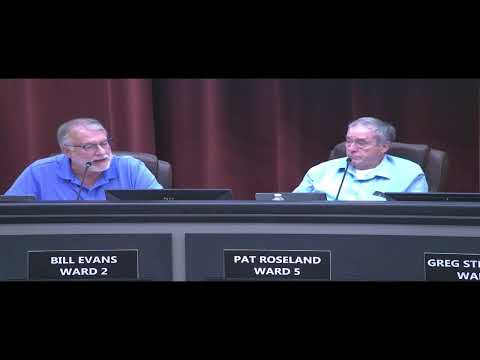
Committee members questioned where generation and new projects would be sited and whether alternatives such as solar, wind or nuclear would be feasible locally. The consultant responded that the electricity mix is regional and that utilities’ generation decisions often cross state lines. Committee member Bill Evans asked why staff labeled the focus area the "I‑90 corridor;" staff replied that the grant specifically covered Meade and Pennington counties and that the city expanded the focus to include Spearfish with EPA approval to keep the project scope manageable for a first planning phase.
The committee voted to acknowledge the presentation. Staff said the next steps include further modeling, focus groups, a public open house and additional council updates as the plan moves toward a final 2025 deliverable.