Get Full Government Meeting Transcripts, Videos, & Alerts Forever!
Get email alerts on the Consular Affairs topic
No spam. Unsubscribe anytime.
Panel explains how the State Department monitors crises, issues travel warnings and conducts evacuations
Summary
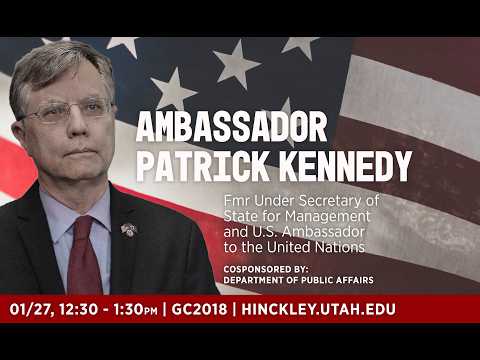
During a Hinckley Institute forum, Ambassador Patrick Kennedy described how U.S. posts, the Bureau of Consular Affairs and interagency partners monitor threats, issue graded travel warnings and coordinate evacuations, citing past large-scale movements of citizens.
At a University of Utah forum, Ambassador Patrick Kennedy explained how the U.S. Department of State monitors risks to Americans overseas and escalates guidance, from post-level advisories to full evacuations. "The Bureau of Consular Affairs has graded travel warnings," he said, and posts use warden networks, local contacts and coordination with intelligence and military partners to protect U.S. citizens.
Why it matters: Students in Hong Kong and other politically volatile places asked how and when the State Department issues stronger recommendations or pulls U.S. personnel and citizens out of harm's way. The panel provided an operational overview of consular responsibilities and emergency planning.
How the system works: Kennedy described a graduated system that starts at individual embassy and consulate posts that monitor local security and warn hotels, tour operators and American citizens to avoid specific areas. If conditions worsen, the department raises warnings and, when necessary, assembles evacuation plans that can include commercial or military transportation. "We warned about the Middle East a number of years ago, and in the end, we took 38,000 people out," the panelist said, describing prior large-scale evacuations.
Coordination and resources: Kennedy said the State Department's consular teams work with the bureau of intelligence and military partners when evacuations require additional capacity. He also described the department's operations center and emergency action planning at posts that staff consular hotlines and track evacuees.
Limitations and audience responsibility: Panelists noted that individual U.S. citizens sometimes ignore posted warnings and that embassy guidance can only reduce but not eliminate risk. They advised travelers to register with local embassy systems, heed travel advisories, and follow predeparture guidance when traveling to areas near conflict or instability.
Next steps: Students were told consular procedures and travel-advice tools are publicly available on State Department websites; panelists encouraged students to consult agency pages and career offices for internships or deeper study of consular work.