Get Full Government Meeting Transcripts, Videos, & Alerts Forever!
Get email alerts on the State Tax Policy topic
No spam. Unsubscribe anytime.
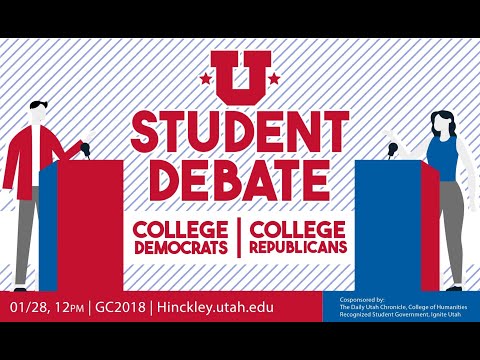
Students clash over Utah tax priorities: Republicans call for cuts and efficiency, Democrats warn of service cuts and regressivity
Summary
In the Hinckley Institute debate, Republicans urged cutting what they called waste, fraud and abuse to reduce taxes and boost household incomes; Democrats warned that repeated income tax cuts shift costs to regressive sales and property taxes and undermine funding for education, research and services.
Moderators asked the final prepared question: what would an effective and fair tax policy look like for Utah? Republican debaters argued for lowering taxes by eliminating “waste, fraud and abuse,” prioritizing efficiency and cutting programs they consider low‑priority or ideologically tilted. One Republican speaker criticized certain university classes as "government subsidized trolling" and suggested prioritizing cuts there before raising taxes.
College Democrat debaters said Utah has had a long Republican supermajority that has enacted multiple income‑tax cuts, and that further cuts would likely shift the burden onto sales and property taxes, which they described as regressive. Democrats warned that continued cuts have already reduced per‑pupil spending and higher‑education research funding, and they urged investment in infrastructure, housing and education to support long‑term economic growth.
The exchange included arguments about UTA and public transit costs, whether privatization would increase efficiency, and whether tax cuts would benefit the middle class or primarily the wealthy. Speakers also debated immediate tradeoffs (cutting teacher budgets, preschool programs and research funding) and defended political records. The moderators then moved into an audience Q&A covering housing affordability, foreign policy and insurance regulation before closing the event. No formal votes or policy decisions were taken at the debate.