Get Full Government Meeting Transcripts, Videos, & Alerts Forever!
Get email alerts on the Land Use Adus topic
No spam. Unsubscribe anytime.
Martin County adopts comprehensive-plan change to allow ADUs; LDR amendments advance to second hearing
Summary
The Martin County Commission adopted a comprehensive-plan amendment to permit accessory dwelling units (ADUs) on single-family lots, 3–2, and advanced land-development regulation changes to a required second public hearing after 5 p.m. on Feb. 24, 2026. Commissioners debated protections for septic, parking and neighborhood character.
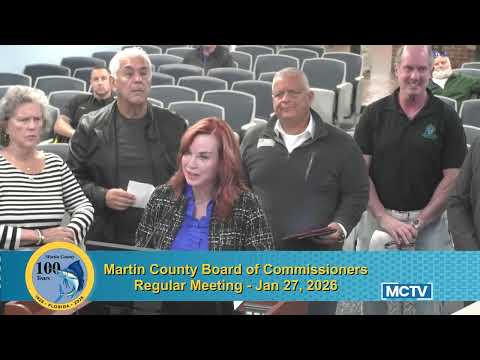
The Martin County Board of County Commissioners on Jan. 27 adopted a change to the county comprehensive plan to update how accessory dwelling units — commonly called ADUs — are defined and permitted, and directed staff to continue land-development regulation changes needed to implement the update.
Amy Offenbach, a planner in the county Growth Management Department, told the board the amendment (CPA 25-04) replaces the older "guest house" term with accessory dwelling units and adds "employee dwelling units" as a category for nonresidential lots that already permit living quarters. Staff recommended approval, noting the Local Planning Agency had recommended the amendment 4–0 and the board had previously transmitted the change to state and regional agencies.
Robert Ranieri of House of Hope urged the board to approve the amendment as another tool to expand affordable housing locally, saying the change "will give you one of those tools for sure." Supporters said ADUs can provide housing for seniors, young workers and single parents while opponents warned the amendment lacked adequate safeguards on setbacks, parking, septic capacity and limits on unrelated occupants.
Commissioner Rob Capps moved approval. After extended discussion about potential neighborhood impacts and enforcement, the board adopted CPA 25-04 on a 3–2 vote, with Commissioners Hurd and Vargas dissenting.
The board also considered LDR 25-03, a set of Land Development Regulation amendments to implement the comp-plan changes. Planning staff explained the comp plan sets policy while the LDRs supply the technical standards — for example, a consistent definition of "family" and the specific setbacks, occupancy limits and use-table updates. The board voted 3–2 to advance LDR 25-03 to a second public hearing; Florida statute requires the second hearing be held after 5 p.m., so the board scheduled the required second hearing for Feb. 24, 2026 (to be held after 5 p.m.).
What happens next: The LDR amendments return for the second hearing and a final vote; if approved, the changes will alter the county code to allow ADUs in zoning districts that permit single-family dwellings (excluding mobile-home districts) and to formalize "employee dwelling units" on certain nonresidential sites.
Quotes and context: "This will give you one of those tools for sure," public-commenter Robert Ranieri said in support. Planning staff emphasized that the LDR hearing is the venue to address the "nitty-gritty" — setbacks, occupancy and septic rules — and the board discussed those specifics during debate.
Ending: The board’s adoption of the comp-plan amendment marks a policy shift intended to expand local housing options; the LDR text will return for a final decision after the statutorily required evening hearing on Feb. 24.