Get Full Government Meeting Transcripts, Videos, & Alerts Forever!
Get email alerts on the Legislative Votes topic
No spam. Unsubscribe anytime.
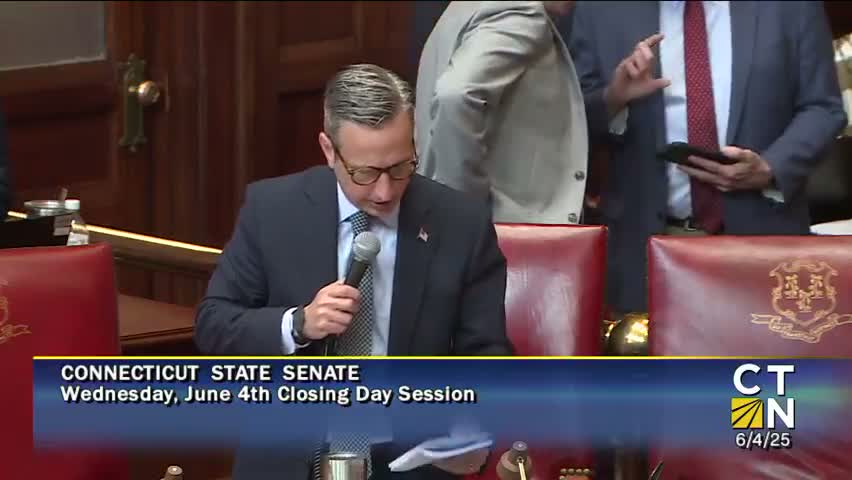
Votes at a glance: key actions by the Connecticut Senate on June 4, 2025
Summary
On the final day of the 2025 session the Senate approved a slate of bills, including an environment / renewable-energy bill (HB5004), a DMV/transportation safety omnibus (HB7160), the major bond authorization (HB7288) and a range of conveyances and technical measures; several roll-call votes were taken late into the evening.
The Connecticut Senate took dozens of roll-call votes on June 4, including several high-profile measures. Key outcomes from the final-day session:
- Substitute for House Bill 5004 (environmental/renewable-energy): Passed. The floor debate centered on emissions targets and whether requiring the DEEP commissioner to include a "schedule of proposed regulations" in a report could begin a regulation-making process. The Senate adopted the substitute and declared passage on a roll-call vote.
- House Bill 7160 (DMV and transportation omnibus): Passed. The bill expands reciprocal suspensions for driving and boating under the influence, creates or expands safety programs (including the "yellow envelope" for invisible disabilities), updates licensing processes, and includes work-zone safety measures and penalties. Passed by immediate roll-call vote.
- House Bill 7288 (Bonding package): Passed. The biennial bond authorization authorizes capital spending for school construction, affordable housing programs, clean water, brownfield remediation, nonprofit and house-of-worship security grants, and other priorities. Sponsors emphasized that not all authorized projects will be bonded immediately and noted the statutory bonding cap.
- Other votes: The Senate approved numerous conveyances of surplus state parcels to municipalities or authorities (including conveyances to Danbury, Southbury and the Capital Region Development Authority), technical and administrative bills (including DECD tax-credit fixes and DMV-related measures), and a set of public-safety and records bills through the night. Several smaller but consequential measures — early childhood policy changes, social-equity/cannabis council refinements, and a drug task-force implementation bill — also passed on roll-call votes.
Most measures were passed after immediate roll-call votes ordered on the floor; clerks announced tallies and presidents declared passage. Several measures were noted as having bipartisan support on the floor; other items produced divided debate, particularly where fiscal consequences or regulatory authority were at issue.
Why it matters: The bills taken up on the final day will shape Connecticut policy on climate planning, public safety, vehicle/boater licensing, housing and education investments and carry implementation tasks for state agencies in the months ahead.