Get Full Government Meeting Transcripts, Videos, & Alerts Forever!
Get email alerts on the Budget Bonding topic
No spam. Unsubscribe anytime.
Senate clears $X billion bond package funding schools, housing, water and nonprofit security
Summary
Senators approved the biennial bonding bill that authorizes capital funding for school construction, housing, clean water, brownfield remediation, solar installations, and security grants for houses of worship and nonprofits; floor discussion emphasized public-safety priorities and long-term debt concerns.
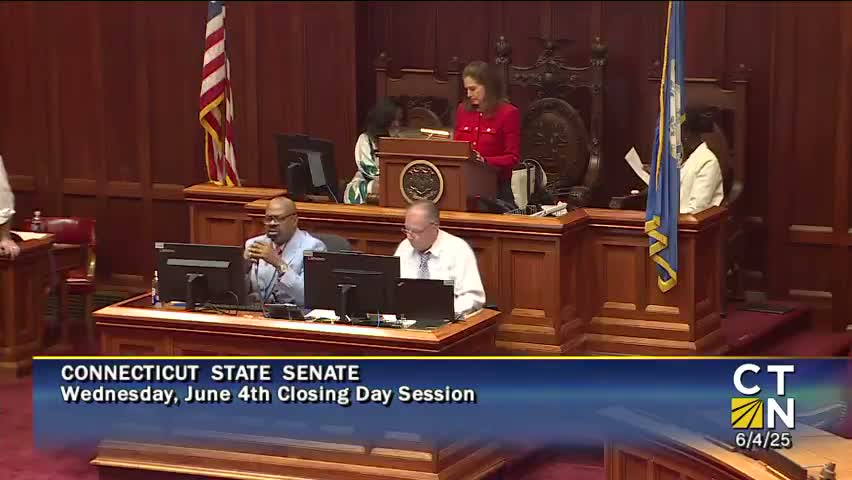
The Connecticut Senate voted to approve the biennial bond authorization package (substitute for House Bill 7288) on June 4, authorizing multi-year capital spending for school construction, clean water, housing initiatives, brownfield remediation and other state infrastructure priorities.
Senator Miller, the bond subcommittee chair, described the package as the result of a collaborative, bipartisan process with agency input and nonpartisan staff analysis. Key authorizations include funding for school construction projects and a new district repair and improvement program to help towns maintain existing facilities, bond support for brownfield mitigation, funds for public housing and housing trust programs, and allocations for nonprofit and house-of-worship security grants. "This package confirms our commitment to special education, clean water, [and] affordable housing," Miller said on the floor.
Several senators praised targeted grants for security at houses of worship in the wake of national incidents and increased local concerns; Senator Slapp highlighted continuing support for synagogues and other religious centers. Other members raised questions about overall long-term debt burden and the criteria for allocating funds to municipalities. Senators emphasized the authorizing nature of the bill — not all projects will be bonded or funded immediately — and noted the bonding cap that governs authorizations.
The Senate took an immediate roll-call vote and the bill passed. Sponsors said the package aims to balance urgent infrastructure needs with fiscal guardrails; opponents urged continued scrutiny of borrowing levels and urged prioritization of projects that yield equitable benefits to towns and taxpayers.
What’s next: The bill goes to the House for concurrence or to the governor for signature depending on the status of companion actions; executive agencies will work with the bonding subcommittee on allocations and subsequent bonding plan implementation.