Get Full Government Meeting Transcripts, Videos, & Alerts Forever!
Get email alerts on the Environment topic
No spam. Unsubscribe anytime.
Senate approves renewable-energy framework after tense debate over commissioner authority
Summary
The Connecticut Senate passed substitute for House Bill 5004, a broad environmental and renewable-energy bill that sets greenhouse-gas reduction goals and asks the DEEP commissioner to prepare a report of proposed regulations. Critics warned the report step could begin a regulatory process with costly mandates; proponents called the measure aspirational and a roadmap for workforce and clean-energy growth.
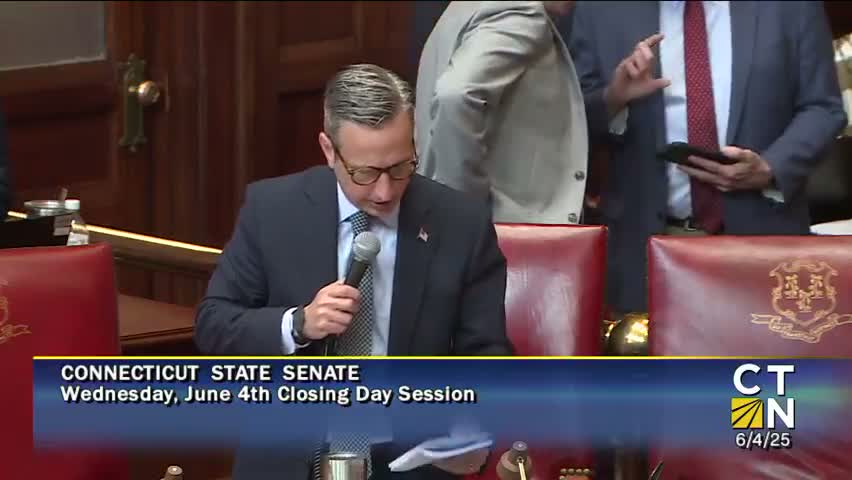
The Connecticut Senate on June 4 passed substitute for House Bill 5004, titled An Act Concerning the Protection of the Environment and the Development of Renewable Energy Sources and Associated Job Sectors, following extended floor debate about the role of the Department of Energy and Environmental Protection.
Supporters framed the bill as an aspirational statewide plan to reduce greenhouse-gas emissions, boost workforce training, and expand renewable-energy deployment. Senator Lopes, the bill’s proponent on the Senate floor, said the measure “looks to facilitate planning that is strategic, comprehensive, and responsible for the future of our state” and stressed provisions to encourage heat-pump deployment, expand access to clean-technology grants, and direct funds to low-income residents.
Opponents focused on lines in the bill that require the DEEP commissioner to publish a report that “shall include a schedule of proposed regulations.” Senator Harding repeatedly argued that language starts a process that could yield binding regulatory proposals. “When a bill says that the commissioner shall draft a report to create proposed regulations, I don’t know how that can be read any other way,” Harding said, warning it could lead to costly mandates for consumers, including potential vehicle and fuel fees.
Proponents, including the bill’s sponsor, countered that the statutory package is primarily goal-setting and guidance for state agencies and state-owned properties. “These are goals. They are not mandates,” the proponent said on the floor, urging that the measure sets targets — including net-zero by 2050 economy-wide goals — while preserving direct legislative control over any binding rules.
Lawmakers pressing for clarity sought and received floor assurances about the bill’s limits, but disagreement remained about the practical implications of directing the commissioner to include “a schedule of proposed regulations” in a public report. The Senate voted after the discussion; the clerk recorded the roll-call tally and the chair declared the bill passed.
What’s next: The substitute now moves back to the House for concurrence with the Senate amendments. Advocates and critics will likely continue to press for statutory clarity should the bill become law, particularly on any future rule-making steps by DEEP.