Get Full Government Meeting Transcripts, Videos, & Alerts Forever!
Get email alerts on the Criminal Justice topic
No spam. Unsubscribe anytime.
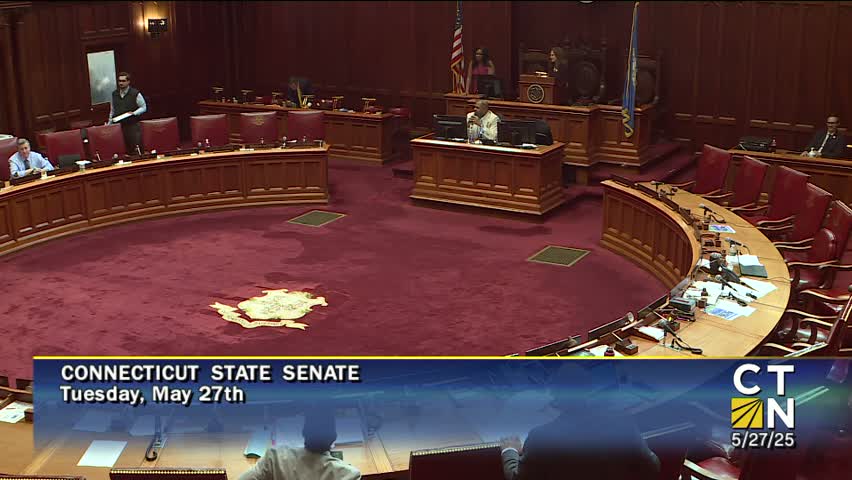
Senate passes criminal‑justice bill with Trust Act updates, DNA/sample rules and new municipal remedies amid heated debate
Summary
House Bill 7259, which includes revisions to the Trust Act, DNA/sample handling, sexual‑assault kit designations, extradition credit, and clarified use‑of‑force language, passed after a prolonged floor debate; several proposed amendments to narrow Trust Act protections were defeated.
The Connecticut Senate passed House Bill 7259 on May 27, a multipart criminal‑justice package that folds in updates to the state’s Trust Act, rules on handling DNA and sexual‑assault kits, sentencing credit for time served while awaiting extradition, and clarifications about use‑of‑force.
Sponsor Senator Winfield said the measure would permit the transfer of certain non‑qualifying DNA samples to the chief state's attorney prior to expungement when such samples may contain exculpatory evidence; it also creates an ‘‘anonymous’’ versus ‘‘reported’’ designation for sexual‑assault evidence kits to help manage testing and storage workloads and requires analysis of collected kits within an established period.
The bill expands the universe of felonies that, when present on an individual’s record, exempt that person from Trust Act protections and permits law enforcement to respond to federal civil detainer requests for a specified list of serious offenses. The bill includes additional categories (as negotiated on the floor) such as certain child‑exploitation and violent‑crime offenses; sponsors argued those additions respond to public‑safety risks identified during hearings.
The Trust Act amendments attracted the most heated floor debate. Opponents said the changes neither go far enough nor are consistently applied and objected to two controversial features added in the final package: (1) a private cause of action allowing injunctive and declaratory relief against municipalities alleged to have violated Trust Act duties, and (2) a statutory possibility of recovering costs and reasonable attorneys’ fees for successful plaintiffs. Supporters said those remedies give the statute ‘‘teeth’’ so that municipalities will comply with the restrictions on sharing information in response to civil immigration detainers.
Several roll‑call amendment votes failed: an amendment to strip the attorney‑fee recovery provision failed, and multiple floor amendments that would have added further violent offenses to Trust Act exemptions were also defeated. The Senate ultimately approved the bill as amended.
Debate also touched on other provisions in the bill: clarifying that electronic defense weapons are not deadly force; narrow clarification that chokeholds may be used to defend a third person; changes around extradition credit calculation for time served in other jurisdictions; and a mix of procedural and implementation steps for law‑enforcement databases and kit processing.
Opponents warned the bill creates complexity and potential municipal liability; proponents emphasized public‑safety exemptions and procedural clarifications. The clerk announced the final passage tally on the floor.