Get Full Government Meeting Transcripts, Videos, & Alerts Forever!
Get email alerts on the Transportation topic
No spam. Unsubscribe anytime.
Senate approves sweeping transportation package with safety, transit and charging-signage changes
Summary
The Connecticut Senate passed Senate Bill 1377, a broad transportation measure that updates mapping systems, expands bus-rapid-transit signal rules, raises some traffic penalties, clarifies left‑lane rules and includes targeted funding and program changes for transit and small harbors.
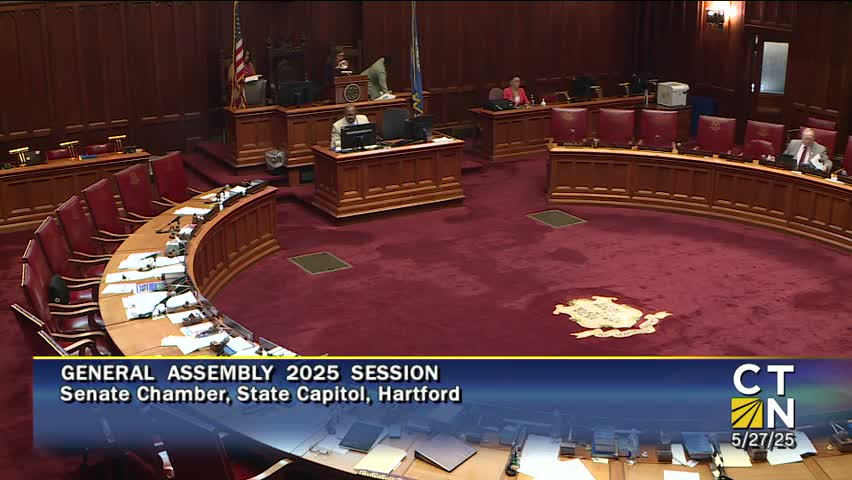
The Connecticut Senate on May 27 passed Senate Bill 1377, an omnibus transportation package that its sponsors described as a public‑safety and transit modernization measure.
The bill directs the Department of Transportation to adopt an updated Connecticut plain coordinate (geodetic) system to improve statewide mapping and asset management; allows the Manual on Uniform Traffic Control Devices (MUTCD) signal types used for light rail to be applied to bus‑rapid‑transit corridors; and clarifies that DOT may publish additional mapping systems beyond federal standards.
Sponsor Senator Christine Cohen said the measure ‘‘prioritizes safety’’ while also ‘‘expanding and enhancing public transportation’’ across Connecticut, and stressed that many sections were the result of committee deliberations and interagency collaboration.
The bill increases the prohibited parking distance from certain crosswalks from 25 feet to 30 feet to improve pedestrian sight lines and creates an escalated fine for repeat parking at fire hydrants (the bill sets a repeat‑offender fine of up to $200). It also raises the fine for specified failure‑to‑yield violations to increase deterrence and requires DOT to run a one‑year education campaign before new left‑lane rules take effect; that clarification, aimed at removing ambiguity about ‘‘extreme left lane’’ use, will be enforced after signage and outreach with a statutory effective date noted by committee witnesses as October 1, 2026.
Transportation provisions affecting transit districts were included: the bill returns the transit‑district funding approach to a more predictable formula and gives DOT authority to assist municipalities seeking federal grants, reflecting growing municipal use of federal funding such as IIJA. The measure codifies the Small Harbor Improvement Program (SHIP) within the port authority and references an existing $20 million bond authorization for those projects.
Other provisions expand municipal tools to manage speed and work‑zone safety: the bill orders a study on wider use of fixed speed cameras on state and municipal roads, clarifies that speed‑camera revenue should be applied to traffic‑safety improvements (including vendor reimbursement), and establishes a statutory role for DOT to help towns implement complete‑streets projects.
Safety‑related equipment and user rules are also addressed. The bill raises the age for required motorcycle helmet use from 18 to 21; it raises the required helmet age for bicycles and similar devices from 16 to 18; and it directs a study of ‘‘intelligent speed‑assistance’’ devices (speed governors) and expands operator‑retraining for reckless‑driving convictions.
Senators emphasized the bill was intended as implementation‑oriented and not a blanket mandate on municipalities. Cohen said the DOT will work with towns and expected federal support for some capital needs in pilot and rollout phases.
The Senate ordered an immediate roll call and approved the bill as amended; the clerk announced the measure passed on the floor.