Get Full Government Meeting Transcripts, Videos, & Alerts Forever!
Get email alerts on the Long Term Care topic
No spam. Unsubscribe anytime.
Senate passes bill requiring long‑term care nondiscrimination notices and training after heated debate over enforcement
Summary
The Senate on May 22 passed House Bill 6913, which requires long‑term care facilities to post nondiscrimination notices, provide DPH‑developed cultural‑competency training and route complaints through the long‑term care ombudsman; senators debated enforcement and whether CHRO or the Department of Public Health should have disciplinary authority.
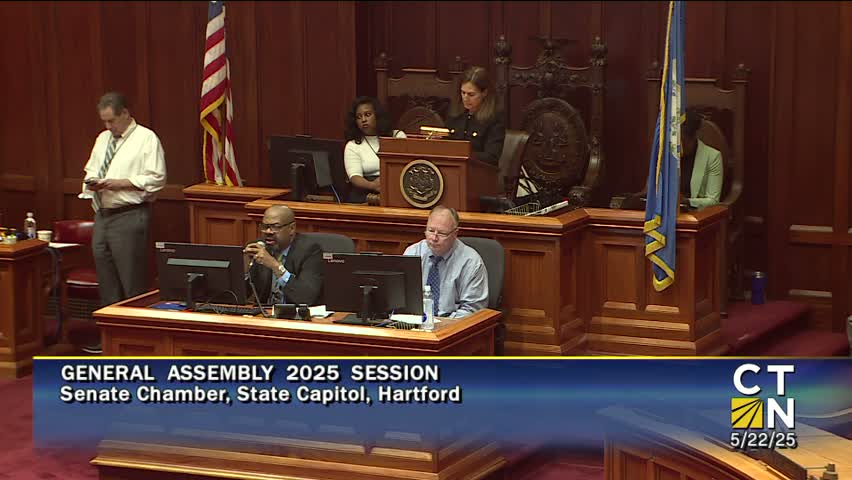
The Connecticut Senate passed House Bill 6913, an act aimed at strengthening protections for residents of long‑term care and assisted‑living facilities from discrimination. The bill requires facilities to post a prominent nondiscrimination notice, direct residents on how to file complaints with the long‑term care ombudsman, and mandates cultural‑competency training for staff who work directly with residents. The Department of Public Health (DPH) would develop the training and the ombudsman would handle initial intake of complaints.
Floor debate was lengthy and sharp. Opponents, led by Senator Sampson, pressed that existing state law and the Connecticut Commission on Human Rights and Opportunities (CHRO) already provide enforcement mechanisms and expressed concern that granting the DPH licensing office the power to impose fines or suspend licenses under Section 19a‑494 would shift adjudicatory authority away from CHRO. Senator Sampson introduced amendment LCO 9069 to strike the paragraph vesting DPH with final disciplinary authority; that amendment failed on a roll call along party lines.
Supporters argued the bill fills practical gaps identified in ombudsman reports and offers residents an accessible pathway to raise concerns. Sponsors said the statute clarifies where residents can go and ensures facilities cannot dodge responsibilities; they also said the bill preserves residents’ right to pursue CHRO remedies.
Key votes and points: - The Senate debated multiple amendments (LCO 9069, LCO 9092) that sought to adjust enforcement and safety provisions; both amendments failed on roll calls. - The bill passed on a roll call and was recorded as adopted in the Senate.
What the bill does and what remains to be decided: the law adds signage and training mandates and explicitly creates an ombudsman intake path to DPH and CHRO. The most contested policy choice — whether the Department of Public Health or CHRO has ultimate enforcement authority for licensing and penalties (statute 19a‑494 allows civil penalties up to $25,000) — remained the crux of floor opposition and failed amendment attempts. Appropriations and committee follow-up were requested to clarify penalties, training content, and interagency process.
Ending: The Senate adopted the bill after amendments failed; sponsors and critics asked state agencies to provide clarifying implementation guidance to the legislature.