Get Full Government Meeting Transcripts, Videos, & Alerts Forever!
Get email alerts on the Public Safety topic
No spam. Unsubscribe anytime.
Senate approves 2.5% wage reopener for State Police; lawmakers cite recruiting, public safety
Summary
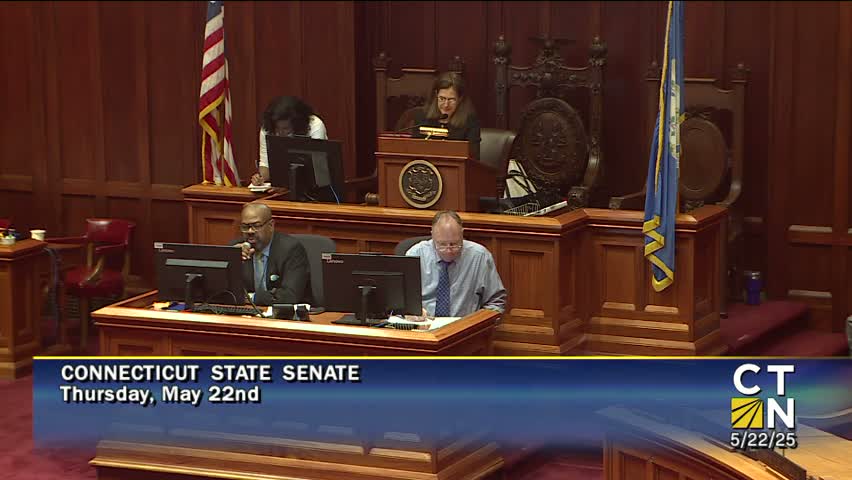
The Connecticut Senate on May 22 approved Senate Resolution 16, a wage reopener covering members of the State Police MP-1 bargaining unit that sponsors say costs roughly $4.39 million and aims to improve recruitment and retention amid staffing shortfalls.
The Connecticut Senate on Thursday approved Senate Resolution 16, a resolution proposing approval of an agreement between the state and the Connecticut State Police Union (MP‑1) that includes a 2.5% wage reopener for fiscal year 2026.
Senator Marilyn Moore Austin, the measure’s proponent, told colleagues the change is a targeted wage reopener for FY26 and not a cost‑of‑living adjustment, and that related fringe‑benefit costs (Social Security, Medicare and retirement contributions) push the state’s near‑term cost to about $4,388,199. Austin said the increase helps recruitment and retention for troopers and other classifications in the MP‑1 bargaining unit.
Lawmakers from both parties urged support during floor debate. Senator Summers said higher pay will help the state attract candidates amid an approximate 25% gap between current staffing and the authorized trooper force. Senator Kissel, who described ride‑along experience earlier in his remarks, and other senators noted troopers’ hazardous duties and long shifts.
The Senate ordered an immediate roll‑call vote and the resolution passed on the floor. Supporters framed the vote as an investment in public safety that will reduce overtime burdens on existing troopers and strengthen municipal resident‑trooper programs.
What happens next: the resolution was adopted in the Senate and will be recorded in the legislative journal. The measure as passed funds a wage reopener for FY26 for MP‑1. Questions lawmakers raised on the floor about longer‑term recruitment impacts and benefit structure were directed to the Appropriations chair and agency staff for follow‑up.