Get Full Government Meeting Transcripts, Videos, & Alerts Forever!
Get email alerts on the Economic Development topic
No spam. Unsubscribe anytime.
Senate approves $1 million makerspace fund to support Connecticut entrepreneurs
Summary
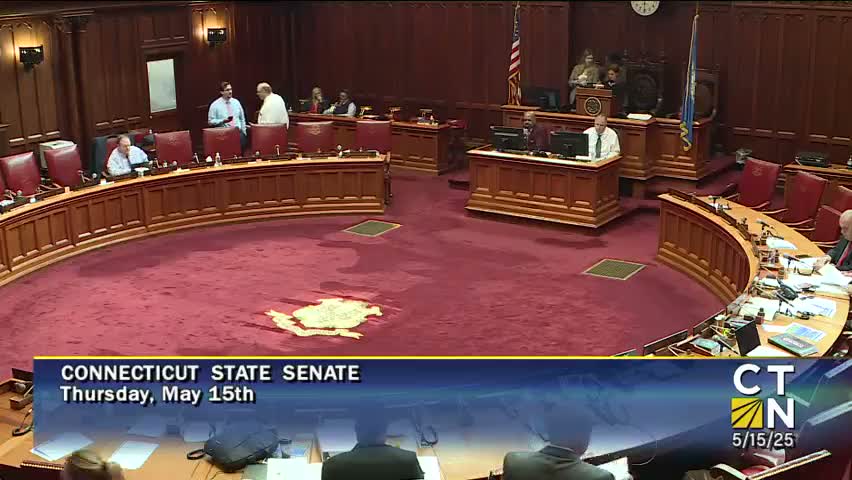
The Connecticut Senate on May 15 approved SB 1179, creating a Connecticut Community Makerspace Initiative. The amended bill establishes a $1,000,000 fund administered by DECD’s Office of Innovation for capital, planning and expansion, with up to 10% available for administration.
The Connecticut Senate on May 15 passed Senate Bill 1179, establishing the Connecticut Community Makerspace Initiative to support early‑stage entrepreneurs and local makerspaces.
Senator Hartley, the bill’s sponsor, told colleagues the bill "comes to us with unanimous support from the Commerce Committee" and said the makerspace model supplies entrepreneurs with shared physical infrastructure and mentorship. She said the amendment before the chamber identifies that the program will be funded "within available appropriations" and creates "a $1,000,000 fund" to be administered out of the Manufacturing Assistance Act by the Department of Economic and Community Development’s Office of Innovation.
Under the amendment, funds may be used for establishment or expansion of existing makerspaces, capital costs, and planning and development; the language includes an allowance for administrative costs (up to 10 percent) to run promotion, applicant vetting and program administration. Supporters described the model as a way to reach underserved communities, provide hands‑on technology and workforce pathways, and seed businesses that may later scale.
Senator Julie Kushner, who has a makerspace in Danbury, praised the measure and highlighted local leadership that helped move the legislation forward. Other senators described site visits to makerspaces in Hartford and elsewhere and related examples of community training, prosthetic fabrication and teacher training used to expand classroom capabilities.
The Senate adopted the amendment by voice vote, then ordered an immediate roll call and passed the bill. The amendment and passage were recorded on the Senate floor and the clerk announced the bill as passed.