Get Full Government Meeting Transcripts, Videos, & Alerts Forever!
Get email alerts on the Prevailing Wage topic
No spam. Unsubscribe anytime.
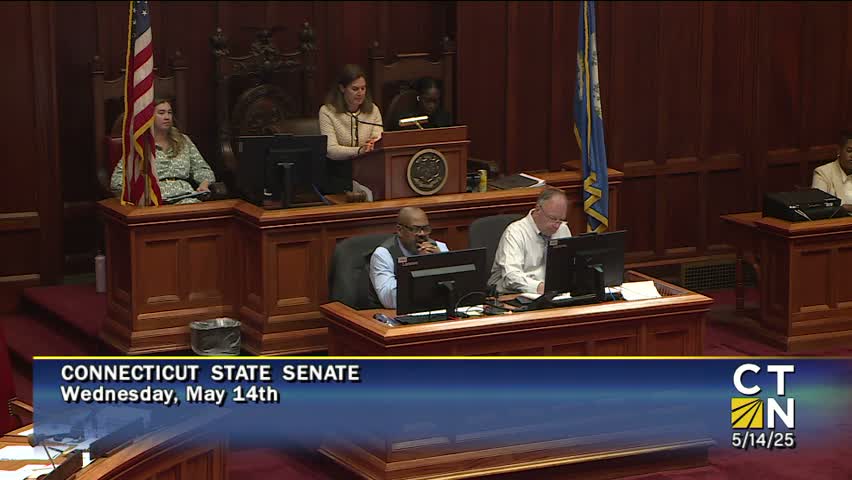
Senate authorizes comptroller to withhold payments for prevailing-wage violations after heated debate
Summary
Lawmakers approved SB 1488 to allow the comptroller to withhold state payments to contractors when the Department of Labor issues a stop-work order for prevailing-wage or workers'compensation violations; supporters called it a stronger enforcement tool, while critics warned of due-process gaps and broad executive discretion.
Hartford ' The Connecticut Senate voted to pass legislation (SB 1488) giving the state comptroller a new tool to withhold payment from contractors or subcontractors when the Department of Labor (DOL) has issued a stop-work order for prevailing-wage or workers'compensation violations.
Senator Kushner (sponsors'committee discussion led by Senator Sampson) described the bill as an additional enforcement mechanism to ensure contractors comply with prevailing-wage statutes and maintain workers'compensation coverage. "Upon the recommendation of the commissioner of the Department of Labor, the comptroller in his discretion could stop payment to that contractor until the violation is corrected," Senator Sampson said on the floor.
Opponents raised repeated due-process concerns. Senator Kushner and other critics warned DOL stop-work orders can be issued on-site and that fines and stop-work orders can go into effect before an employer has a hearing. They argued that allowing the comptroller to withhold payments could halt entire projects and deprive workers (including subcontractors) of pay while disputes are contested. "This bill gives both executive-branch officials broad power," Senator Kushner said, arguing the statute as drafted created discretion for the commissioner and then a separate discretion for the comptroller.
Senator Sampson and other proponents said the bill does not create new stop-work authority; it only creates a stronger enforcement remedy after stop-work findings and DOL hearings. They pointed to rising numbers of stop-work orders in recent fiscal years as evidence of recurring problems and argued for a more immediate remedy.
The Senate debated the legislative text at length, including the timing of DOL investigations, the hearing window (10 days to request a hearing after a stop-work order), and how stop-work orders apply to contractors and subcontractors on multi-prime projects. Senator Sampson provided DOL statistics during the floor exchange indicating a higher number of stop-work orders in recent fiscal years (e.g., 144 in FY24, 124 as of Apr. 30 in FY25), which proponents used to justify the need for the new tool.
The vote passed on the floor and the legislation now advances to the House; the Senate roll-call shows the measure cleared the chamber.
What this does and does not do: SB 1488 does not itself expand DOL's authority to issue stop-work orders; it authorizes the comptroller to withhold state payments after a stop-work finding and customary hearing processes have occurred. Supporters say the provision helps enforce wage law more quickly; critics want firmer statutory guardrails to limit discretionary withholding and protect due process.
The bill text and floor transcript show the key exchange and vote; implementation will require DOL procedures and comptroller coordination to avoid unintended disruption to multi-prime public projects.